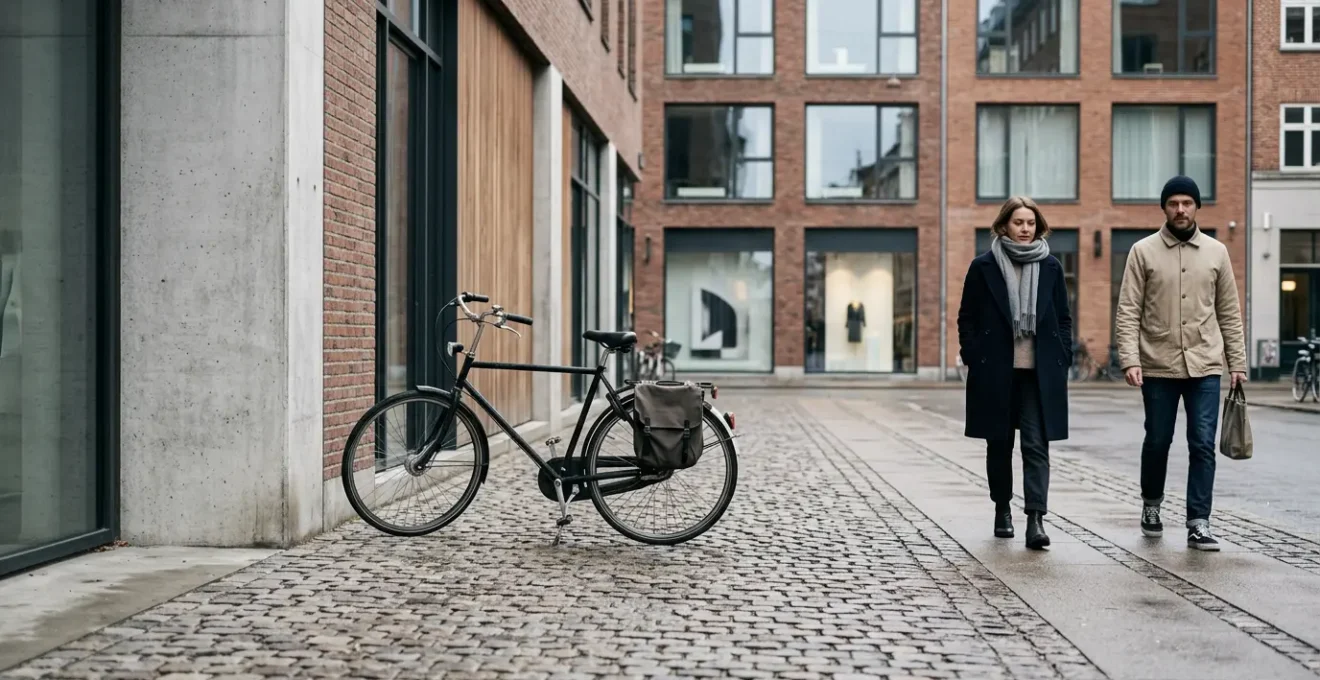
Copenhagen’s coveted “cool” isn’t about exclusive trends; it’s a practical aesthetic forged by a unique blend of accessible high-culture and everyday pragmatism.
- The city’s famous minimalist style is directly shaped by its dominant bike culture, prioritizing function over flash.
- World-class cultural exports like Nordic Noir TV and Copenhagen Fashion Week are intentionally made accessible to the public.
Recommendation: To truly experience the scene, skip the tourist traps and instead trace the footsteps of your favorite TV characters, explore Vesterbro’s affordable art galleries, and thrift for designer gems in Nørrebro.
When you picture Copenhagen, a specific moodboard likely comes to mind: cozy “hygge” interiors, monochromatic minimalist outfits, and the atmospheric grit of a Nordic Noir thriller. While these elements are part of the city’s identity, they’ve become well-worn clichés that barely scratch the surface of its vibrant cultural landscape. Many guides will point you toward Nyhavn’s colorful facades and list the same handful of popular designer stores. They tell you what is cool, but rarely explain *why* it exists or how you can authentically participate in it.
But what if the key to unlocking Copenhagen’s scene isn’t found in a prescriptive list of dos and don’ts? What if its celebrated coolness is actually an expression of something far more interesting: a deep-seated pragmatism, a democratic approach to creativity, and a social fabric that seamlessly blends high-concept art with daily life. The city’s aesthetic isn’t just for show; it’s a functionalist response to its environment, from fashion designed for cycling in the rain to public broadcasting that turns the entire city into a cinematic character.
This guide moves beyond the stereotypes. We’ll explore the real-world locations that gave Nordic Noir its soul, reveal how anyone can get a taste of Fashion Week, decode the logic behind the ubiquitous neutral palette, and show you where to find the next wave of Danish art and music. It’s time to dive into the world that shapes the trends, not just the one that follows them.
To help you navigate this dynamic cultural scene, we have structured this guide around the key questions every trend-conscious traveler asks. From screen to street, this is your roadmap to experiencing the authentic creative pulse of Copenhagen.
Summary: Your Insider’s Guide to Copenhagen’s Cool Scene
- The Bridge and Borgen: Where Can You Find Iconic TV Locations?
- Can Regular People Attend Events During Fashion Week?
- Why Is Everyone Wearing Black and Beige in Copenhagen?
- Thrifting in Nørrebro: How to Find Scandi Brands for Cheap?
- Beyond Aqua: Who Are the Danish Bands You Should Know Now?
- Vesterbro Galleries: Where to Buy Affordable Art from Rising Stars?
- Magstræde or Snaregade: Which Old Street Offers the Best Photo Op?
- How to Experience World-Class Contemporary Art in Copenhagen and Beyond?
The Bridge and Borgen: Where Can You Find Iconic TV Locations?
The global obsession with Nordic Noir did more than just popularize a genre of television; it transformed Copenhagen into a living film set. Series like *Borgen*, *The Killing*, and *The Bridge* didn’t just use the city as a backdrop—they embedded its architecture, atmosphere, and political institutions into their DNA. This concept of cinematic urbanism has turned otherwise ordinary locations into destinations for cultural pilgrimage, allowing visitors to step directly into the world of their favorite characters.
The DR Effect: How Public Broadcasting Built a Genre
Much of this phenomenon can be traced back to Danmarks Radio (DR), the country’s public broadcaster. By fostering a risk-taking environment and investing in high-quality, character-driven narratives, DR allowed series like *Borgen* to become global hits. Filming in authentic locations—from the real corridors of power in Christiansborg Palace to the windswept expanse of the Øresund Bridge—was a deliberate choice. It grounded the stories in a tangible reality, positioning Nordic Noir as a distinct genre and turning the Danish capital into a cinematic destination for fans worldwide.
For those looking to trace the footsteps of Sarah Lund or Birgitte Nyborg, many key sites are easily accessible. You don’t need a formal tour to feel the moody energy of these locations; a simple city map and a train ticket are often all that’s required to start your own investigation. Exploring these spots offers a unique way to understand the city’s geography and the quiet drama that defines its modern identity.
Your Nordic Noir Field Guide: Key Locations
- Christiansborg Palace: Start at the heart of *Borgen*. Key political scenes were filmed in the courtyards and around the arches of the real seat of Danish Parliament.
- Copenhagen City Court (Polititorvet): Recognize the imposing police headquarters from *The Bridge*? The real building is located near Tivoli Gardens and is an icon of Neoclassical architecture.
- The Øresund Bridge: Take the 20-minute train to Malmö, Sweden. The journey itself takes you across the iconic bridge where the inciting incident of *The Bridge* took place.
- Blågårdsgade in Nørrebro: For dedicated fans, a walk down this street will reveal the small grocery store featured in the first series of *The Bridge*.
- Book a Guided Walk: For deeper context, consider a private Nordic Noir tour. Companies offer 1.5-2 hour guided walks covering locations from *The Killing*, *Borgen*, or *The Bridge*.
Can Regular People Attend Events During Fashion Week?
Copenhagen Fashion Week (CPHFW) has a reputation for being one of the most innovative and forward-thinking on the global circuit, but many assume it’s an industry-only affair. Contrary to that belief, CPHFW embodies a uniquely democratic spirit. While the main runway shows are reserved for press and buyers, the entire city comes alive with events, installations, and talks that are open to the public. The organization has leaned heavily into digital access, making its high-concept vision available to a global audience.
This commitment to openness is not just a gesture; it’s a core strategy that has paid off. The move to live-stream all shows has dramatically expanded its reach, with data from its partnership with YouTube showing a 68% increase in viewership during the digital-only seasons. This digital-first mindset ensures that anyone, anywhere, can have a front-row seat. For those physically in Copenhagen, the real magic happens on the streets and at the numerous public-facing events that orbit the official schedule.
The energy outside the show venues is often as compelling as the collections themselves. It’s here that you can witness the famous Scandi street style in its natural habitat. This is where trends are born, making it a prime opportunity for people-watching, photography, and style inspiration. Beyond the spectacle, a rich program of public events provides substantive engagement with the industry’s creative and intellectual side.
How to Access Copenhagen Fashion Week Without an Invite
- Watch Live-Streamed Shows: Every runway show is streamed for free on the CPHFW YouTube channel and official website.
- Visit Public Installations: Brands across the city host pop-ups and immersive installations. Check the official CPHFW schedule for locations and opening hours.
- Join Public Talks: CPHFW hosts panels on topics like sustainability, often in partnership with major publications, which are open to the public on a first-come, first-served basis.
- Haunt Street Style Hotspots: Position yourself outside key venues like the Bella Center to observe and photograph the incredible street style moments between shows.
- Follow the Hashtag: Track #CPHFW on Instagram and TikTok for real-time updates on fringe events, parties, and last-minute public activations.
Why Is Everyone Wearing Black and Beige in Copenhagen?
The stereotypical image of Scandinavian style is one of strict minimalism and a muted color palette dominated by black, beige, and grey. While it’s true that you’ll see plenty of neutral tones on the streets of Copenhagen, writing it off as simple minimalism misses the point entirely. The aesthetic is less about a prescribed look and more about a deeply ingrained philosophy of pragmatism. This is a functionalist aesthetic, born from the realities of daily life in the city.
As the Highsnobiety editorial team notes, the style is a complex fusion of global influences and local necessities. In an article on the topic, they state:
Scandinavian fashion blends quintessential American cool with Japan’s razor-sharp style, a touch of Italian elegance, and rounds it off with a utilitarianism that can only come from countries that have to brave some of the harshest weather conditions daily.
– Highsnobiety Editorial Team, The Scandinavian Brands to Know Ahead of Copenhagen Fashion Week
This utilitarianism is the key. In Copenhagen, the bicycle is king, and the city’s fashion has evolved to serve the cyclist. Garments are designed for movement, layering is essential for fluctuating weather, and durable, high-quality fabrics are prized over fleeting trends. The dark, neutral colors are not just a stylistic choice; they are a practical one, adept at hiding the occasional splash of mud or chain grease from a daily commute.
Case Study: The Cyclist’s Influence on Fashion Pragmatism
Copenhagen’s dominant bike culture directly shapes its fashion, as analyzed by fashion commentators. The average resident cycles over 15 kilometers a day, meaning clothes must be comfortable and resilient. This has fostered a design philosophy rooted in functionality and longevity. The preference for an understated look also reflects a wider cultural value tied to the Protestant work ethic, where quality is expressed through craftsmanship and material, not flashy logos or ostentatious displays of wealth. The minimalist look, therefore, is a byproduct of a culture that values practicality, sustainability, and understated elegance.
Thrifting in Nørrebro: How to Find Scandi Brands for Cheap?
The Danish appreciation for quality and longevity in fashion has a natural consequence: a thriving and highly sophisticated second-hand market. In a city where sustainability is a point of national pride, thrifting isn’t just about saving money; it’s an integral part of the fashion ecosystem. The district of Nørrebro, with its bohemian vibe and independent spirit, is the undisputed epicenter of this scene. Here, you can find everything from charity shops to curated vintage boutiques overflowing with pre-loved pieces from coveted Scandi brands.
This circular approach to fashion is not just a niche hobby; it’s a significant part of the industry’s success. The Danish fashion sector’s impressive growth is intrinsically linked to this mindset. According to data released for CPHFW’s 20th anniversary, there has been an 84% growth in Denmark’s fashion exports over two decades, a testament to the global appeal of brands that are built to last—and thus, perfect for the resale market. Hunting for these brands in Nørrebro is a treasure hunt where the prize is high-end design at a fraction of the cost.
To succeed, however, you need a strategy. Knowing the local terminology and the best times to visit can make all the difference between a frustrating search and a wardrobe-defining discovery. The side streets off the main thoroughfare of Nørrebrogade are where the real gems are hidden.
Your Action Plan: Thrifting Premium Danish Brands in Nørrebro
- Learn the Lingo: Know the difference. ‘Genbrug’ refers to affordable charity shops, ‘Loppemarked’ is a flea market for bargain hunting, and ‘Vintage’ boutiques offer curated, high-end investment pieces.
- Time Your Visit: Go on weekday mornings (Wednesday-Friday, 10am-12pm). Stores like Røde Kors Megastore are quieter and have often just restocked.
- Explore the Side Streets: Venture off Nørrebrogade onto streets like Jægersborggade, where you’ll find dense clusters of specialized secondhand shops.
- Know Your Labels: Hunt for iconic Danish brands like Ganni, Stine Goya, and Baum und Pferdgarten. Shops such as Tú a Tú and Racks Copenhagen specialize in these labels, often at 50-70% off retail.
- Hit the Flea Market: Check out Veras Market on Sundays at Bispeengen 12. It’s a festival-like market where locals sell their own clothes, offering authentic Scandi brands at great prices. Bring cash or have the MobilePay app ready.
Beyond Aqua: Who Are the Danish Bands You Should Know Now?
While 90s pop acts like Aqua may have put Denmark on the global music map, the country’s contemporary soundscape is infinitely more diverse, sharp, and compelling. The same creative energy that fuels its design and film industries also produces a steady stream of world-class musical talent across a spectrum of genres. From blistering post-punk to sophisticated electro-pop and soulful art rock, the current Danish scene is defined by its quality and artistic integrity.
To truly tap into the city’s modern pulse, you need to update your playlist. The artists making waves today are often characterized by a sound that is both internationally resonant and subtly informed by a Nordic sensibility—a certain clarity, a melodic precision, or an undercurrent of melancholy. These are the bands you’ll hear in the cool bars of Vesterbro and see on posters for the Roskilde Festival.
Here are a few essential names to get you started:
- Iceage: Arguably one of the most critically acclaimed rock bands to emerge from Denmark in the last decade. Their sound has evolved from raw, aggressive punk to a more expansive and artful post-punk that is both menacing and poetic.
- MØ: You might know her from her global smash hit “Lean On” with Major Lazer, but Karen Marie Ørsted’s solo work is a masterclass in fiery, energetic electro-pop. Her music is infectious, emotional, and perfect for a night out.
- AGNES: Not to be confused with the Swedish singer of the same name, Agnes Obel is a composer and singer-songwriter whose music is hauntingly beautiful. Her classically-infused, minimalist compositions for piano and cello create an atmosphere of intense, cinematic beauty.
- Trentemøller: Anders Trentemøller is a master of electronic soundscapes. Starting in the techno scene, his work has grown to encompass dark, cinematic electronica, dreamy shoegaze, and moody synth-pop, making him a legend of the Danish electronic scene.
Vesterbro Galleries: Where to Buy Affordable Art from Rising Stars?
Copenhagen’s art scene operates on the same principle of democratic creativity that defines its fashion and media: world-class talent is surprisingly accessible. You don’t need a massive budget to start an art collection here. The Vesterbro district, particularly the area around the old meatpacking plants known as Kødbyen, has transformed into a vibrant hub for contemporary art. Its stark, industrial architecture provides a perfect, no-frills backdrop for galleries showcasing the work of emerging and mid-career artists.
These galleries are often less intimidating and more approachable than their counterparts in other major art capitals. The focus is on the art itself, and gallerists are frequently passionate advocates for their artists, happy to talk with curious visitors. Many of these spaces specialize in prints, photography, and smaller-scale works, making it possible to acquire a piece of original art from a rising star for a reasonable price. It’s a chance to invest in talent at the ground level.
Wandering through Kødbyen on a Saturday afternoon, you can drift between gallery openings, food stalls, and bustling bars. The experience is less about quiet, hallowed halls and more about art as an integrated part of a lively urban neighborhood. Look for spaces like V1 Gallery and its sister gallery Eighteen, which are known for their sharp curation and for launching the careers of artists who go on to international acclaim. This is where you’ll find the pulse of the city’s visual arts scene.
Magstræde or Snaregade: Which Old Street Offers the Best Photo Op?
In the heart of Copenhagen’s old town lie two of its most picturesque and photographed streets: Magstræde and Snaregade. Running parallel to each other, they represent some of the best-preserved historic architecture in the city. At first glance, they seem similar, with their cobblestones and colorful, leaning townhouses. However, each offers a distinctly different photographic opportunity, and the “best” one depends entirely on the shot you’re trying to capture.
Magstræde is the undisputed icon. Its gentle curve is its defining feature, creating a perfect leading line that draws the eye through a vibrant canyon of ochre, red, and yellow buildings. This is the money shot, the one you’ve likely seen on postcards and Instagram feeds. It’s dynamic, colorful, and instantly recognizable. The downside? It’s also significantly more popular, meaning you’ll often have to contend with crowds and parked cars that can clutter your frame. For the classic, vibrant Copenhagen photo, Magstræde is your target.
Snaregade, on the other hand, is the connoisseur’s choice. It is straighter, narrower, and generally quieter. What it lacks in iconic curvature, it makes up for in intimate, atmospheric detail. The buildings feel a bit more rustic and preserved, and the lack of crowds allows you to focus on textures, doorways, and the play of light on the ancient cobblestones. This street is for the photographer seeking a more tranquil, timeless, and personal shot of old Copenhagen. It’s less about the grand statement and more about capturing a quiet moment in history.
So, what’s the verdict? For the quintessential, high-energy photo that screams “Copenhagen,” head to Magstræde. For a more contemplative and detailed shot that captures the soul of the old city, Snaregade is the superior choice.
Key takeaways
- Copenhagen’s famous minimalist style is primarily driven by a functionalist aesthetic shaped by the city’s dominant bike culture.
- World-class cultural institutions, from Nordic Noir television production to Copenhagen Fashion Week, are deliberately made accessible to the public.
- The city’s creative scene thrives on a democratic spirit, visible in its affordable art market and vibrant secondhand fashion ecosystem.
How to Experience World-Class Contemporary Art in Copenhagen and Beyond?
While Vesterbro’s galleries offer a thrilling glimpse into the city’s emerging art scene, Copenhagen and its surroundings are also home to world-class institutions that place it firmly on the global art map. These museums are not just repositories for famous works; they are architectural marvels in their own right, designed to create a profound dialogue between art, nature, and the viewer. Experiencing them is essential to understanding the sheer ambition and quality of Denmark’s creative vision.
The most famous of these is the Louisiana Museum of Modern Art, located a short train ride up the coast from the city. More than just a museum, it’s an experience. The architecture masterfully weaves through a lush landscape, with glass corridors looking out over the Øresund strait. Its collection includes works by modern masters from Giacometti to Warhol, but the real star is the seamless integration of art and environment. The sculpture park, where works by artists like Henry Moore and Alexander Calder are set against the sea and sky, is unforgettable.
Back closer to the city, ARKEN Museum of Modern Art offers a different but equally powerful experience. Its deconstructed, ship-like architecture juts out into the coastal landscape south of Copenhagen. It boasts a formidable collection of contemporary art, with a strong focus on Scandinavian and international artists. For those who prefer to stay central, Copenhagen Contemporary, located on the post-industrial island of Refshaleøen, offers massive-scale installation art in former factory halls. These institutions prove that in Denmark, engaging with world-class art is not a formal, stuffy affair but a dynamic and essential part of public life.
Now that you’re equipped with an insider’s perspective on Copenhagen’s cultural scene, the next step is to immerse yourself in it. Start planning your own cultural tour, whether it’s by tracing the steps of your favorite detective or discovering your new favorite artist.