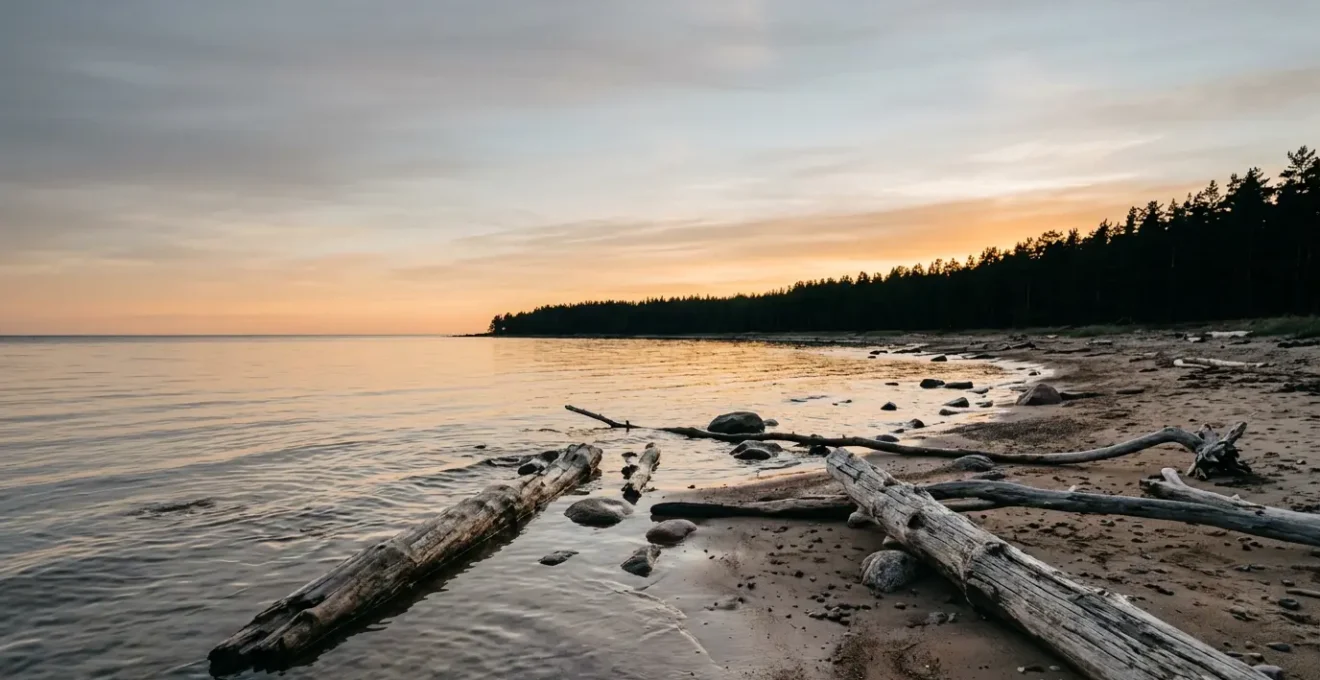
The Baltic Sea is far more than a cold, shallow body of water; it’s a complex brackish ecosystem governed by scientific paradoxes. Its famously low salinity, a result of massive freshwater inflow, creates a unique habitat that both challenges marine life and perfectly preserves historical artifacts like wooden shipwrecks by deterring destructive organisms. Understanding these underlying mechanisms is the key to truly appreciating its subtle beauty and fragile nature.
To many, the Baltic Sea is an enigma—a vast, cold, and dark expanse of water. The common knowledge often stops at a few curious facts: it’s less salty than a “real” ocean, you might find pieces of amber on its shores after a storm, and its waters are often too chilly for a comfortable swim. These observations, while true, are merely surface-level symptoms of a much deeper and more fascinating ecological story. They are clues to a unique environment that functions as a massive, natural living laboratory.
As a marine biologist, I invite you to look beyond these simple truths. The key to genuinely appreciating the Baltic coast lies not in just knowing *what* makes it different, but in understanding *why*. What if the low salinity is the master key that unlocks the secrets to everything else, from the species that thrive here to the incredible preservation of centuries-old shipwrecks on its floor? This unique water chemistry creates a world of ecological paradoxes, where life must constantly adapt to conditions found almost nowhere else on Earth.
This guide will move past the trivia and delve into the science that governs this inland sea. We will explore the fundamental reasons behind its brackish nature, learn the practical science of hunting for fossilized treasures, understand the specific challenges facing its aquatic life, and see how its cold embrace becomes an unlikely guardian of history. By the end, you will not just see a sea, but a complex, fragile, and deeply interconnected system worthy of both admiration and protection.
This article explores the core scientific principles that define the Baltic Sea’s character. Below is a summary of the key topics we will investigate to build a complete picture of this remarkable ecosystem.
Summary: The Baltic Anomaly: A Scientist’s Guide to Appreciating the Unique Nature of a Misunderstood Sea
- Why Is the Baltic Sea Less Salty and How Does It Affect Your Swim?
- Amber Hunting: How to Spot ‘Rav’ After a Storm?
- Seatrout Fishing: Do You Need a License to Cast from the Shore?
- Blue-Green Algae: When Is It Unsafe to Enter the Water?
- Is the Baltic Sea Ever Warm Enough for a Long Swim?
- How to Visit the Meeting Point of Two Seas at Grenen?
- Preserved by the Baltic: Why Do Wooden Ships Survive Longer Here?
- Dry Suit Diving: How to Prepare for Your First Cold Water Dive?
Why Is the Baltic Sea Less Salty and How Does It Affect Your Swim?
The single most defining characteristic of the Baltic Sea is its low salinity, a condition known as being brackish. This is the fundamental scientific principle from which nearly all its other unique qualities derive. The reason is twofold: the sea is a semi-enclosed basin with only narrow connections to the much saltier North Sea, and it receives an immense volume of freshwater from over 250 rivers and streams draining a vast surrounding land area. The result is a dramatic dilution.
To put this in perspective, Finnish marine research confirms that there are only around 7 grams of salt per kilogram of water in the Baltic’s surface layers. This is a stark contrast to the world’s oceans, which average a robust 35 grams per kilogram. This has a direct physical effect on your swimming experience. You’ll notice a significant lack of buoyancy compared to the ocean; it’s harder to float. On the positive side, the water feels ‘softer’ on the skin and doesn’t sting your eyes, making for a more comfortable dip.
This low-salinity environment creates extreme evolutionary pressure. Only a specialized few species from both freshwater and marine origins can tolerate these conditions. This makes the Baltic’s ecosystem incredibly unique but also highly vulnerable to change, as its inhabitants are already living at the edge of their physiological limits. Every organism, from plankton to seals, is a testament to adaptation in this remarkable brackish world.
This fundamental property of the water is the starting point for understanding everything else, from the fish that swim in it to the treasures it occasionally washes ashore.
Amber Hunting: How to Spot ‘Rav’ After a Storm?
One of the most magical experiences on the Baltic coast is finding “Baltic gold” or *rav*, the local name for amber. It’s crucial to understand that amber is not a stone. It is a geological fossil: the fossilized resin of ancient coniferous trees that grew in the region 40-60 million years ago. This makes every piece a tiny, tangible connection to a prehistoric world. The Baltic region is the world’s most significant source of this material; geological surveys show that more than 90% of the world’s accessible amber originates from these deposits.
These vast amber deposits lie on the seabed. The key to finding it on the shore is a storm. Strong winds and powerful waves, especially from the south or southwest, churn up the sea floor and dislodge the lightweight amber. Because amber has a density only slightly greater than water, it gets carried ashore along with other buoyant natural debris. This is why the best hunting grounds are not clean, sandy beaches, but messy tangles of seaweed and driftwood where the amber becomes trapped.
As the image shows, amber is often found nestled amongst organic material. You must train your eye to spot its warm, honey-to-caramel glow against the dark, wet seaweed. Distinguishing it from similarly colored stones can be tricky. A helpful field test is to gently tap it against your teeth; amber produces a soft, plastic-like ‘clack’, whereas a stone will feel hard and cold.
Action Plan: How to Hunt for Baltic Gold
- Timing is Everything: Search immediately after a major storm has subsided, when the sea has just deposited fresh material on the shore. Early morning is ideal to be the first on the scene.
- Location, Location, Location: Focus your search on messy areas with large accumulations of seaweed and organic debris. Amber’s buoyancy causes it to wash ashore with these materials.
- Look for Contrast: Scan the dark, wet seaweed piles for the warm, translucent glow of amber. Its color ranges from pale yellow to deep, rich cognac.
- The Tooth Test: If you find a promising piece, gently tap it against your front teeth. Amber will make a soft, dull click, while a stone will feel hard and sharp.
- The Saltwater Test: If you’re unsure at home, mix a strong saltwater solution (about 10 teaspoons of salt in a large glass of water). Real amber will float, while most rocks and plastics will sink.
This rewarding activity transforms a simple beach walk into a treasure hunt, connecting you directly to the deep geological history of the Baltic region.
Seatrout Fishing: Do You Need a License to Cast from the Shore?
The Baltic’s brackish water, which poses a challenge for many marine species, creates a nearly perfect environment for sea trout (*Salmo trutta*). These anadromous fish are born in the freshwater rivers that feed the sea, migrate to the Baltic to grow and feed, and then return to their home rivers to spawn. The low-salinity water reduces the physiological stress of moving between freshwater and saltwater, allowing them to thrive.
However, this unique fishery is not a free-for-all. The question of licensing is critical, but it has no single answer. Regulations vary dramatically between the different countries bordering the Baltic Sea, such as Denmark, Germany, Poland, and Sweden. Some regions require a national fishing license, a local permit, or both, even for casting from the shore. Others may have designated license-free zones or specific seasons. It is absolutely imperative for any angler to research and comply with the specific local laws of the area they intend to fish. Ignoring these rules can lead to significant fines and harms conservation efforts.
Appreciating this resource also means understanding its fragility. These populations face immense pressure from habitat degradation and historical overfishing. A recent assessment by the Helsinki Commission (HELCOM) estimates that only around 500 natural sea trout populations are estimated to exist today in the entire Baltic Sea region. This makes responsible angling, including catch-and-release practices and adherence to size limits, not just a legal requirement but a moral one for preserving this iconic species.
Fishing becomes a part of a larger stewardship, acknowledging the delicate balance that allows these magnificent fish to exist in this unique sea.
Blue-Green Algae: When Is It Unsafe to Enter the Water?
During the warm summer months, visitors to the Baltic Sea may encounter a phenomenon known as blue-green algae blooms. Scientifically, these are not true algae but massive accumulations of cyanobacteria. They are a natural part of the Baltic ecosystem, but large-scale blooms can pose a health risk and are a visible symptom of a deeper ecological issue: eutrophication.
Eutrophication is the over-enrichment of water by nutrients, primarily nitrogen and phosphorus, from agricultural runoff and wastewater. As WWF Baltic experts explain, these cyanobacteria require light, warmth, and nutrients to grow. The calm, warm surface waters of late summer provide the perfect conditions for explosive growth, creating the characteristic blooms. This means it is a seasonal issue, with the highest risk typically occurring from July through August.
It is unsafe to enter the water when a dense bloom is present. Some species of cyanobacteria can produce toxins that may cause skin irritation, eye infections, and gastrointestinal issues if ingested. You should always use visual cues to assess the risk. Avoid swimming if the water has a cloudy, “pea soup” appearance, is covered in a greenish-yellow scum, or has a distinctively foul, grassy smell. Heed all local warnings posted at beaches and check online advisories from local environmental agencies, which often provide real-time maps of bloom locations.
While unsettling, these blooms are a powerful reminder of the Baltic’s sensitivity to human activity on the surrounding land, linking our actions directly to the health of the sea.
Is the Baltic Sea Ever Warm Enough for a Long Swim?
The Baltic Sea has a reputation for being perpetually cold, which is largely true for most of the year. However, the question of whether it’s warm enough for a proper swim in the summer is more complex than a simple “yes” or “no.” The answer lies in a key oceanographic phenomenon known as the thermocline.
Because the sun’s energy only penetrates the upper layers of the water and the sea’s low salinity affects water density, a distinct layering effect occurs in summer. The wind and waves mix the sun-warmed surface water, creating a relatively warm layer. Below this, there is a sharp boundary—the thermocline—where the temperature plummets to the deep, frigid water that remains cold year-round. This structure is a defining feature of the summer Baltic.
The Baltic Marine Environment Protection Commission (HELCOM), a governing body for the sea’s health, provides a clear scientific explanation of this process:
In summer a thermocline – a distinct layer of water where the temperature changes rapidly – divides surface waters into two layers: a wind-mixed surface layer down to a depth of 10–25 m, and a deeper, denser and colder layer.
– HELCOM, The nature of the Baltic Sea
This means that during peak summer, typically in July and August, the surface layer can reach pleasant temperatures of 18-22°C (64-72°F) in many coastal areas, making a long swim perfectly possible and enjoyable. However, if you were to dive down just a few meters, you would feel an abrupt and shocking transition to water that might be only 4-8°C (39-46°F). So, while you can enjoy a warm swim, you are always floating on a thin lens of warmth above a deep, cold core.
This layered temperature structure is yet another example of how the Baltic’s unique physics creates a surprising and dynamic environment for bathers.
How to Visit the Meeting Point of Two Seas at Grenen?
At the very northernmost tip of Denmark lies a spectacular geographical feature: Grenen. This long, shifting sandbar is the exact point where two seas collide. It is not, as is sometimes misunderstood, the meeting of the Baltic and the North Sea. Rather, it is where the Skagerrak (an arm of the North Sea) and the Kattegat (the wide bay that serves as the entrance to the Baltic Sea) meet head-on.
Visiting Grenen offers a powerful, tangible demonstration of powerful marine forces. You can literally stand at the apex of the sandbar and watch the waves from two different seas crash into each other. The line of turbulence is often clearly visible, a result of the different densities, salinities, and temperatures of the two bodies of water. It is a dramatic and humbling experience to witness this constant, dynamic battle of currents. For safety reasons, swimming is strictly forbidden at the very tip due to the incredibly strong and unpredictable currents created by this collision.
Reaching the final point of Grenen is an adventure in itself. From the main parking area, it’s a long but beautiful walk along the beach. Alternatively, many visitors opt for a ride on the iconic “Sandormen” (The Sand Worm), a large tractor-pulled bus designed to drive across the soft sand. This service transports people out to the farthest accessible point, allowing everyone to witness the meeting of the seas. The area is also a renowned birdwatching site, as it’s a major migratory route for many species.
It provides a visual metaphor for the Baltic’s status as a sea apart, separated from the wider ocean by these turbulent, powerful straits.
Preserved by the Baltic: Why Do Wooden Ships Survive Longer Here?
One of the most astonishing paradoxes of the Baltic Sea is that its cold, dark, and seemingly inhospitable depths are a perfect sanctuary for wooden shipwrecks. While ships in the world’s major oceans are devoured by marine organisms within decades, the Baltic floor is a virtual museum, preserving vessels from centuries ago in remarkable condition. The primary reason for this is, once again, the sea’s low salinity.
The main culprit for the destruction of wooden wrecks in saltwater is the shipworm (*Teredo navalis*). Despite its name, it is not a worm but a type of saltwater clam notorious for boring through and consuming submerged wood. However, this destructive mollusc simply cannot survive in the brackish conditions of the Baltic Sea. The water is not salty enough for it to live and reproduce. This single biological factor has made the Baltic an unparalleled repository of maritime history.
The preservation is further enhanced by two other factors: the constant cold temperatures of the deep water and anoxic conditions—a lack of oxygen in the bottom layers. The cold slows down the rate of all chemical and biological decay, while the absence of oxygen inhibits the bacteria and fungi that would normally break down the wood. The most famous example of this phenomenon is the Swedish warship *Vasa*, which sank in Stockholm harbor in 1628 and was salvaged in 1961, over 333 years later, with its hull almost entirely intact. It stands today as a breathtaking testament to the Baltic’s unique preservative powers.
This remarkable quality makes every dive to a wreck a potential journey back in time, revealing secrets that would have long vanished in any other sea.
Key Takeaways
- The Baltic’s low salinity (brackish nature) is its defining feature, a direct result of being a semi-enclosed basin receiving huge freshwater inflows, which shapes all life within it.
- This unique water chemistry makes the Baltic a “museum” for wooden shipwrecks by preventing the survival of the destructive shipworm, preserving centuries of maritime history.
- Seasonal phenomena like the summer thermocline (a warm surface layer) and late-summer algae blooms are direct results of its geography and must be understood for safe enjoyment.
Embracing the Cold: Preparing for a Dry Suit Dive in the Baltic
For those who wish to truly immerse themselves in the Baltic’s hidden world, particularly its historic shipwrecks, surface swimming is not enough. The key to exploring this cold underwater realm is dry suit diving. Unlike a wetsuit, which traps a thin layer of water against the skin to be heated by the body, a dry suit is designed to keep the diver completely dry.
The principle is simple: the suit is a waterproof shell with seals at the neck and wrists. The diver wears insulating undergarments underneath, much like wearing warm clothes on a cold day. The air trapped inside these undergarments provides the primary thermal protection. This method is far more effective in cold water, allowing for longer and more comfortable dives in the year-round frigid temperatures of the Baltic’s depths. Mastering dry suit diving is a gateway to witnessing the incredibly preserved wrecks that lie on the seafloor.
However, diving in a dry suit requires specific training beyond a basic open-water certification. The air inside the suit affects buoyancy, and a diver must learn to manage it by adding or venting air to maintain neutral buoyancy at different depths. Without proper training, it can be difficult and dangerous. Preparation for a first cold-water dive involves getting certified by a recognized agency, selecting the right thickness of thermal undergarments for the expected water temperature, and practicing buoyancy control skills with an experienced instructor.
To truly connect with this unique environment, the next step is to observe it firsthand, whether from the shore or beneath the waves, always respecting local guidance and its delicate ecological balance.