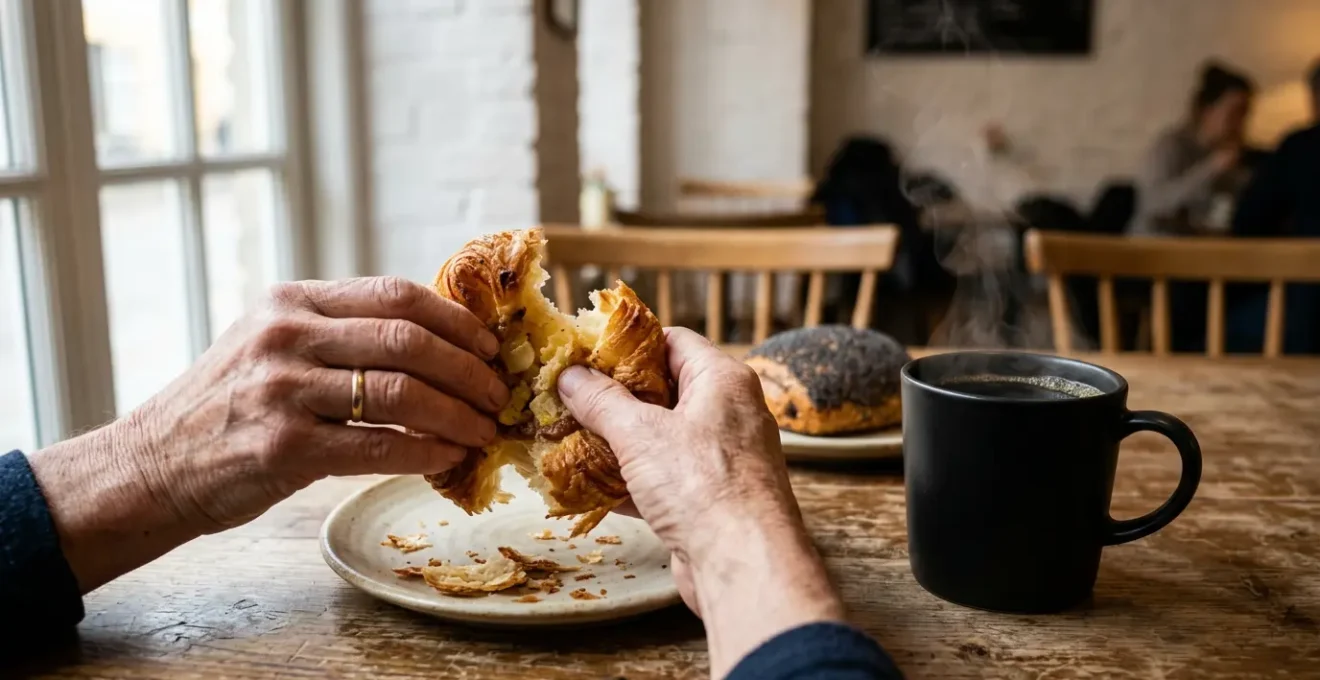
Standing before a Danish bakery display can feel overwhelming. The key isn’t just knowing the names, but understanding how to choose the right pastry for your moment. This guide acts as your personal café consultant, helping you navigate the delightful choices based on dough texture, the ideal coffee pairing, and even how much of a delicious mess you’re prepared to make. It’s about turning a moment of confusion into a perfect, intentional coffee and cake ritual.
Come on in. The scent of cardamom, baked butter, and freshly brewed coffee hangs in the air. Before you is a glass case, a mosaic of golden, glistening pastries. You see spirals, squares, and circles, some dusted with nuts, others drizzled with icing. This is the heart of a Copenhagen bageri, and for a first-time visitor, it can be as intimidating as it is beautiful. You’ve heard the names—Spandauer, Tebirkes, Kanelsnegl—but what are they, really? Which one will deliver that perfect, soul-warming experience Danes call hygge?
Many guides will just give you a list of bakeries. They’ll tell you that Danish pastries are flaky and that you should enjoy them with coffee. But that doesn’t help when you’re faced with a choice between a glossy, custard-filled circle and a poppy-seed-covered marvel that looks like it might shatter if you breathe on it too hard. The secret to the perfect Danish coffee break isn’t just about what you order, but why you order it.
What if the real key was not just identifying the pastry, but understanding its personality? This guide is different. As a café owner, I see that moment of happy indecision every day. My goal is to be your guide through that glass case. We’ll decode the textures, from pillowy brioche to shattering laminated dough. We’ll explore the art of the coffee pairing, and yes, we’ll even talk about the practicalities of eating a gloriously messy pastry in public. By the end, you won’t just be ordering a pastry; you’ll be curating your own perfect moment of Danish delight.
This article will walk you through the history, the key pastry players, and the cultural rituals that surround the Danish coffee break. Let’s start your delicious education right here.
Summary: Your Guide to the Copenhagen Bakery Counter
- Vienna Bread: Why Do Danes Call Danish Pastries ‘Viennese’?
- Latte or Filter: What Is the Traditional Coffee Pairing for Pastry?
- How to Eat a Flaky Pastry in Public Without Making a Mess?
- Chocolate or Sugar Glaze: Which Topping Signals a True Spandauer?
- Is It Possible to Find Authentic Gluten-Free Wienerbrød in Copenhagen?
- Brioche vs. Wienerbrød Dough: Which Texture Makes the Best Snail?
- Where to Find a Cafe with Board Games and Fireplaces in Copenhagen?
- Sct. Peders Bageri or Meyers: Who Bakes the Ultimate Wednesday Snail?
Vienna Bread: Why Do Danes Call Danish Pastries ‘Viennese’?
The first thing to know when you step into a Danish bakery is a charming contradiction: what the world calls “Danish pastry,” the Danes themselves call wienerbrød, or “Viennese bread.” This isn’t just a quirky name; it’s the key to understanding the very soul of these treats. The story begins not in Copenhagen, but in Vienna, with a technique known as lamination, where paper-thin layers of dough are folded around sheets of cold butter. This process is what gives croissants and other fine pastries their delicate, flaky structure.
So how did this Austrian technique become Denmark’s national specialty? It all comes down to a historic labor dispute. During the pivotal bakery workers’ strike of 1850, Danish bakery owners were forced to hire foreign workers to keep their ovens running, many of whom came from Austria. These Viennese bakers brought their lamination techniques with them, introducing a whole new world of pastry to the Danish public. The Danes instantly fell in love with the light, buttery creations.
However, the Danes didn’t just copy the recipes; they perfected them. As local bakers returned to work, they began to adapt the Austrian methods to their own tastes. They enriched the dough by adding more eggs and, in a truly Danish move, significantly more butter. This created a richer, more tender, and even flakier final product than its Austrian predecessor. This unique adaptation is the wienerbrød we know and love today—a pastry with Viennese roots but a distinctly Danish heart.
Understanding this history is the first step in appreciating the craft behind each pastry. That delicate flakiness isn’t an accident; it’s a legacy of a historic culinary exchange.
Latte or Filter: What Is the Traditional Coffee Pairing for Pastry?
Now that you appreciate the pastry’s history, let’s talk about its essential partner: coffee. In Copenhagen’s modern cafés, you’ll see flat whites and lattes everywhere, but the truly traditional Danish way to enjoy wienerbrød is with a cup of strong, black filter coffee, known as sort kaffe. This isn’t just a matter of taste; it’s a matter of balance. The high acidity and clean finish of a good filter coffee are the perfect counterpoint to the rich, buttery intensity of a Danish pastry. It cuts through the sweetness and fat, cleansing the palate and preparing you for the next delicious bite.
This preference for unadorned coffee runs deep in Danish culture. In fact, recent data on Nordic coffee habits shows that almost 50% of Danish consumers prefer black coffee without any milk or sugar. This tradition is often enjoyed at home, brewed in a classic Moccamaster, and savored as part of the afternoon ritual of eftermiddagskaffe—a restorative break from the day.
Of course, the modern Copenhagen coffee scene offers a world of options beyond the traditional. A creamy, milk-based drink like a cortado or flat white can beautifully complement a pastry with a less buttery profile, like one filled with fruit or almond remonce. The choice depends on the experience you’re seeking, as this table illustrates.
| Pairing Style | Coffee Type | Flavor Profile | Best Pastry Match | Cultural Context |
|---|---|---|---|---|
| The Traditionalist | Filter Coffee (Sort Kaffe) | High acidity, clean finish, robust | Spandauer, Tebirkes (buttery/rich) | Classic hygge, home brewing (Moccamaster) |
| The Modernist | Flat White / Cortado | Smooth, balanced, milk-based | Kanelsnegl, fruit-filled pastries | Third-wave Copenhagen cafes |
| The Connoisseur | Black Filter (Light Roast) | Nuanced, aromatic, fruity notes | Almond-based pastries | Specialty coffee movement |
So, when you order, think of your coffee not as an afterthought, but as an integral part of the pairing. Do you want the traditional, sharp contrast of filter coffee, or the smooth harmony of a modern milk-based drink? Your answer is the next step in building your perfect pastry experience.
How to Eat a Flaky Pastry in Public Without Making a Mess?
You’ve chosen your coffee. Now for a very practical consideration: messiness. Let me share a little secret from behind the counter: a truly great wienerbrød is meant to be messy. Those shattering flakes are a sign of a perfectly laminated, butter-rich dough. But there’s a difference between a few delightful crumbs and a full-blown pastry explosion on your coat. This is where the “Flake-o-Meter” comes in—a mental guide to help you choose a pastry that matches your situation.
Are you on a first date or heading to an important meeting? You might want to steer clear of the notoriously messy Tebirkes. Its combination of extreme flakiness and a generous topping of poppy seeds makes it a high-risk, high-reward choice. On the other hand, if you’re settling into a cozy café corner for a solo treat, embracing the glorious, flaky chaos of a Tebirkes is part of the authentic experience.
If you do opt for a flaky masterpiece, Danes have developed methods for damage control. In a café, it is perfectly acceptable—and quite wise—to ask for a fork and knife. For a pastry on the go, the paper bag it came in is your best friend. Hold it underneath your pastry to act as a crumb-catcher. The most important rule, however, is to not fear the flakes. They are a badge of honor, proof that you’ve enjoyed your pastry to the fullest.
To help you make a strategic choice, here is a breakdown of the messiness levels of some popular pastries.
| Pastry | Flake-o-Meter (1-10) | Primary Mess Factor | Recommended Technique | Shareability |
|---|---|---|---|---|
| Tebirkes | 10/10 | Poppy seeds + extreme flakiness | Fork & knife mandatory, break in half first | Low (too messy) |
| Spandauer | 6/10 | Custard leakage + moderate flakes | Eat from edges inward, napkin ready | Medium |
| Kanelsnegl (Wienerbrød dough) | 7/10 | Butter layers shattering | Break into sections, bag-funnel method | Medium |
| Kanelsnegl (Brioche dough) | 3/10 | Minimal flaking, sticky glaze | Handheld, wet wipe recommended | High |
So, before you point to that pastry, ask yourself: what’s my mess tolerance today? Your answer will guide you to the perfect choice, ensuring your enjoyment isn’t overshadowed by a flurry of unwanted flakes.
Chocolate or Sugar Glaze: Which Topping Signals a True Spandauer?
Now let’s zoom in on a true icon of the Danish bakery: the Spandauer. It’s that classic, circular pastry with a depressed center, often called a “baker’s eye.” But what exactly makes a Spandauer a Spandauer? Is it the chocolate, the sugar glaze, or the creamy filling? The answer lies in its traditional anatomy. A true Spandauer is defined by its flaky, circular wall of dough protecting a delicate center.
That center is typically a dollop of either yellow custard (creme) or jam (marmelade). While modern bakeries get creative, the classic is all about that creamy or fruity heart. As for the topping, a traditional Spandauer is finished with a sprinkle of chopped hazelnuts or almonds and a light, often translucent, sugar glaze. A thick layer of white icing or a drizzle of chocolate, while delicious, is usually a modern variation rather than a sign of the original classic.
Mitzie Mee, an expert on Danish culture, provides a clear definition that helps cut through the confusion:
Spandauer is one of the oldest and most beloved kinds of wienerbrød. It’s the classic round pastry with a little well in the middle, filled with either jam or custard cream and finished with a sprinkle of chopped nuts and a light glaze.
– Mitzie Mee, Wienerbrød: Traditional Danish Pastry
The pastry also comes with a rather amusing, though debated, origin story for its name, connecting it to a famous prison.
The Spandau Prison Naming Theory
One popular theory suggests the Spandauer pastry was named as a humorous reference to Spandau prison in Berlin, with the yellow custard center resembling an inmate’s face peering out from the pastry. While this origin story is debated, it reflects the playful naming traditions in Danish baking history, where pastries were often given exotic or whimsical names in the mid-1800s.
So, when you’re looking for an authentic Spandauer, look for that golden, flaky circle with a simple custard or jam center and a delicate scattering of nuts. It’s a taste of pure Danish pastry history, with or without the prison jokes.
Is It Possible to Find Authentic Gluten-Free Wienerbrød in Copenhagen?
This is a question I hear often, and it requires an honest answer. Finding a gluten-free pastry that perfectly replicates the shattering, multi-layered texture of a traditional wienerbrød is incredibly difficult, bordering on impossible. The science of baking is at the heart of this challenge. Gluten, the protein found in wheat flour, is what provides the elasticity and structure necessary to trap the countless layers of butter during lamination. Without it, achieving those distinct, flaky layers is a massive technical hurdle.
As the experts at Skandibaking explain, the very essence of the pastry is tied to this specific protein.
A 100% authentic, flaky, gluten-free wienerbrød is extremely difficult to achieve due to the science of gluten in lamination. Gluten provides the structure that traps butter layers and creates the signature flaky texture.
– Skandibaking, Danish Pastry Dough (Wienerbrødsdej)
But please, don’t be discouraged! While a true gluten-free wienerbrød is the unicorn of the Danish bakery world, Copenhagen is filled with other incredibly delicious, traditional, and naturally gluten-free treats. You just need to know where to look. Instead of focusing on the wienerbrød section, turn your attention to the category of cakes known as tørkager (“dry cakes”) and other confections. Many of these rely on almond flour, marzipan, or meringue, making them perfect gluten-free alternatives that are just as authentically Danish.
So, while the flaky layered pastry might be off the table, you can still have a wonderfully authentic and delicious experience. Exploring these other treats is a fantastic way to discover a different, yet equally beloved, side of Danish baking culture.
Your Checklist for Gluten-Free Danish Treats
- Sarah Bernhardt Cookies (Sarabernadter): Seek out these elegant cookies, which feature an almond-based macaroon bottom topped with rich chocolate ganache. They are a classic and naturally gluten-free.
- Flødeboller: Look for these popular chocolate-covered marshmallow domes. Just confirm with the baker that the wafer base is gluten-free, as many artisanal versions are.
- Mazarin Cake (Mazarinkage): Inquire about this dense, moist cake made from almond paste. It’s often gluten-free and offers a rich, nutty flavor.
- Almond Småkager: Scan the cookie jars for Danish butter cookies (småkager) made with almond flour. They provide that satisfying buttery crunch without the wheat.
- Ask with Confidence: When in doubt, simply ask the baker, “Har du noget uden gluten?” (Do you have anything without gluten?). They will be happy to guide you to the best options.
Embracing these alternatives allows you to participate fully in the coffee and cake ritual, with no compromise on taste or tradition.
Brioche vs. Wienerbrød Dough: Which Texture Makes the Best Snail?
Let’s talk about one of the most popular shapes in the pastry case: the snail, or snegl. You’ll see cinnamon snails (kanelsnegle) and cardamom snails (kardemommesnurrer) everywhere. But not all snails are created equal. The secret to their texture lies in their very foundation: the dough architecture. The primary distinction is between a laminated wienerbrød dough and an enriched brioche-style dough.
A snail made from wienerbrød dough is a marvel of lamination. It has that signature flaky, shattering quality. When you bite into it, the layers break apart, creating a light, buttery explosion in your mouth. This structure is fantastic for holding onto a generous amount of cinnamon filling and buttery remonce. It’s a more modern take on the cinnamon snail, prized for its crisp, multi-layered texture.
On the other hand, a snail made from an enriched brioche dough offers a completely different experience. Here, the butter is mixed directly into the dough rather than layered within it. This results in a soft, pillowy, and chewy texture. It’s a comforting, bread-like pastry that you can tear apart. This dough is the perfect vehicle for aromatic spices like cardamom, as its softer crumb absorbs and holds the fragrance beautifully. This is the texture you’ll find in a classic Swedish-style cardamom bun (kardemummabullar) which has become a staple in Copenhagen.
Neither is “better”—it’s all about your personal preference. Are you in the mood for the light, shattering crispness of a laminated pastry, or the soft, chewy comfort of a brioche-style bun? Understanding this fundamental difference in dough architecture is the key to choosing the snail that will bring you the most joy.
Where to Find a Cafe with Board Games and Fireplaces in Copenhagen?
You’ve navigated the bakery case, chosen the perfect pastry and coffee pairing, and considered your mess tolerance. Now, for the final, crucial ingredient: the right atmosphere. The Danish concept of hygge isn’t just about coziness; it’s about contentment, connection, and creating a warm, restorative space. Many Copenhagen cafés are designed specifically to foster this feeling, offering not just great coffee, but also fireplaces, comfy armchairs, and communal activities like board games.
Finding these havens is part of the joy of exploring the city. Look for cafés tucked away on side streets, with glowing lights visible through the windows and the soft murmur of conversation inside. Places like Paludan Bog & Café combine the joy of reading with coffee, while others are built entirely around the spirit of communal fun. These are places where you are encouraged to slow down and settle in for hours.
This brings us to a piece of unspoken café etiquette. In a hygge-focused café, lingering is not just accepted; it’s expected. But it comes with a polite understanding. The “rent” for your cozy spot by the fire is often paid by ordering a second coffee or, even better, another pastry. This isn’t a transactional rule but a way of participating in the culture of slow, shared time. A perfect real-world example of this is a beloved Copenhagen institution.
Bastard Café: Copenhagen’s Board Game Hygge Hub
Bastard Café exemplifies hygge culture through communal board gaming. With over 3,800 games, this café in Huset-KBH encourages patrons to settle in for hours. Friendly “game gurus” explain the rules, and the atmosphere is built around togetherness. As an example of local culture, students even receive a 50% discount. The etiquette is clear: buying a second drink or snack is the polite way to “pay rent” for your table, embracing the “slow coffee” tradition. This model of shared play and extended stays perfectly captures the Danish concept of hygge, which is further detailed by VisitCopenhagen’s profile of the café.
So, don’t just grab your pastry and go. Seek out a place that invites you to stay. Light a candle, open a book, or challenge a friend to a board game. This is how you transform a simple coffee break into a truly memorable and authentic Danish experience.
Key Takeaways
- Pastry names have history: “Danish” pastries are called “Viennese bread” (wienerbrød) in Denmark due to their Austrian origins.
- Coffee is a strategic choice: Traditional black filter coffee cuts the richness of buttery pastries, while modern milk drinks pair well with less intense ones.
- Embrace the mess (or plan for it): The flakiness of a pastry is a sign of quality; use the “Flake-o-Meter” to choose your pastry based on your situation.
Sct. Peders Bageri or Meyers: Who Bakes the Ultimate Wednesday Snail?
We’ve covered the classics and the culture, but now we arrive at a Copenhagener institution: the Onsdagssnegl, or “Wednesday Snail.” This isn’t just any cinnamon roll; it’s a super-sized, often heavily glazed version sold, as the name implies, on Wednesdays. It has become a beloved weekly ritual, a mid-week peak of indulgence. Two bakeries, in particular, are famous for their take on this tradition, representing two different philosophies of baking: Sct. Peders Bageri and Meyers Bageri.
Sct. Peders Bageri, Copenhagen’s oldest bakery, is the traditionalist champion. Their Wednesday Snail is legendary, a massive, face-sized pastry drenched in a thick sugar glaze. It’s unapologetically sweet, gloriously sticky, and incredibly popular. The bakery’s history dates back to 1652, and their approach is one of pure, classic indulgence. Their success is staggering, with Copenhagen’s oldest bakery selling around 4,000 of these giant snails every single Wednesday.
In the other corner is Meyers Bageri, founded by Claus Meyer, the co-founder of the New Nordic Cuisine movement. Their snail represents a more modern, refined approach. While still a treat, it’s typically less sweet, with a lighter glaze that allows the quality of the ingredients, like organic Øland wheat flour, to shine through. It’s an elegant, nuanced snail for those who prefer complexity over sheer size and sweetness.
Choosing between them is the final step in your pastry education. Do you crave the over-the-top, traditional indulgence of Sct. Peders, or the refined, ingredient-focused craftsmanship of Meyers? There is no wrong answer. To help you decide, here is a direct comparison of the two contenders.
| Characteristic | Sct. Peders Bageri (Classic) | Meyers Bageri (New Nordic) |
|---|---|---|
| Philosophy | Traditional indulgence (est. 1652) | New Nordic refinement (Claus Meyer) |
| Size | Roughly twice normal kanelsnegl | Standard to slightly larger |
| Glaze-to-Dough Ratio | Heavy sugar glaze/icing | Lighter glaze, less sweet |
| Sweetness Level | Very high (tons of glaze) | Moderate (refined sugar usage) |
| Price (Wednesday Special) | 15 DKK (special discount day) | ~40 DKK (standard pricing) |
| Instagrammability | High (face-sized, dramatic) | Medium (elegant, refined) |
| Ingredients | Traditional recipe | Organic Ølandshvede flour |
Participating in the Wednesday Snail ritual is the perfect way to feel like a true local. Whichever you choose, you’ll be taking part in a delicious Copenhagen tradition.
Now that you’re armed with this knowledge, you can walk into any Danish bakery with confidence. Look at the flaky layers, the glistening toppings, and the pillowy doughs, and make a choice that is truly your own. Enjoy your perfect coffee and pastry moment.