The global spotlight on Noma often obscures a more important truth: New Nordic is a widespread culinary philosophy, not just a single restaurant.
- Its core is the 2004 Manifesto, a strict code emphasizing hyperlocal, seasonal, and ethical sourcing that defines its gastronomic DNA.
- This philosophy can be experienced affordably at Bib Gourmand spots and is expressed creatively through non-alcoholic juice pairings.
Recommendation: To truly understand the movement, one must look past the star ratings and explore its diverse expressions across Copenhagen.
For years, the conversation around New Nordic cuisine has orbited a single, blazing star: Noma. Its revolutionary approach and consistent accolades have rightfully placed it at the apex of global gastronomy. For the discerning foodie, however, this intense focus raises a crucial question. Has the movement become a monolith, or is there a vibrant, innovative world thriving just beyond Noma’s perpetually booked-out dining room? The answer is a resounding yes, but accessing it requires shifting one’s perspective from chasing a singular reservation to decoding a culinary philosophy.
The common advice to simply “eat local” barely scratches the surface. The New Nordic revolution is not about a loose collection of ingredients; it’s a disciplined framework built on a radical commitment to time, place, and technique. It’s a movement that has matured, its principles—its very gastronomic DNA—seeding a new generation of restaurants that express this identity in wonderfully diverse ways. These are not mere imitations but unique interpretations, accessible at various price points and levels of formality.
This guide moves beyond the Noma-centric narrative. We will delve into the foundational principles that give the cuisine its soul, from the ethics of foraging to the strict tenets of its manifesto. We’ll provide the insider strategies needed to navigate this exclusive world, whether you’re seeking a last-minute Michelin seat, a high-value Bib Gourmand meal, or a taste of Danish tradition that existed long before the revolution. It’s time to explore the full spectrum of a movement that has fundamentally reshaped modern dining.
To navigate this rich culinary landscape, this article breaks down the essential facets of the New Nordic experience, from its core philosophy to the practicalities of dining in Copenhagen. Explore the sections below to chart your own gastronomic journey.
Summary: Beyond Noma: Charting the True North of New Nordic Cuisine
- Sea Buckthorn and Ramsons: Can You Forage New Nordic Ingredients Yourself?
- How to Snag a Reservation at a Michelin Star Restaurant Last Minute?
- Seasonal and Local: What Are the Strict Rules of the New Nordic Manifesto?
- Bib Gourmand: Where to Eat New Nordic Without the Michelin Price Tag?
- Why Are Juice Pairings Now as Prestigious as Wine Pairings?
- Where to Eat in Nyhavn Without Paying Double for Mediocre Food?
- Mead and Smoke: Where to Eat a Historically Accurate Viking Meal?
- Where to Eat Authentic Frikadeller Like a Danish Grandmother Makes?
Sea Buckthorn and Ramsons: Can You Forage New Nordic Ingredients Yourself?
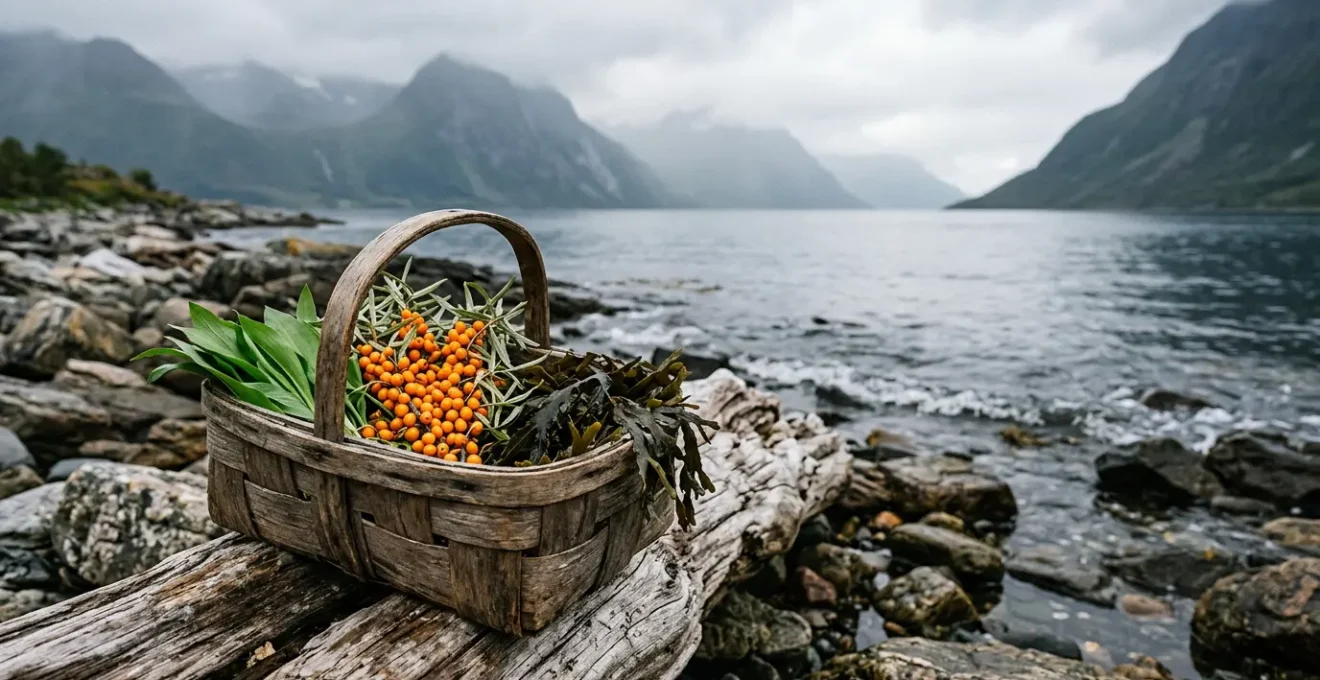
The absolute foundation of New Nordic cuisine is its intimate relationship with the landscape. Before any flame is lit or any dish is composed, there is the ingredient, sourced with an almost dogmatic commitment to what the immediate environment provides. This is hyperlocalism in its purest form, and foraging is its ultimate expression. It’s about rediscovering the wild pantry—the sharp tang of sea buckthorn on a coastal dune, the gentle garlic notes of ramsons in a damp forest, or the briny complexity of seaweed harvested from a cold shore.
While the prospect of foraging your own ingredients is romantic, it demands immense respect and knowledge. This isn’t a casual stroll through the woods; it’s a practice governed by ethics and safety. Many chefs and restaurants employ professional foragers who possess a deep, multi-generational understanding of the ecosystem, ensuring that wild resources are maintained for the future. For the amateur, the learning curve is steep and the risks—from poisonous lookalikes to environmental contaminants—are real.
If you are determined to try, it must be done with a profound sense of responsibility. According to the experts at the Nordic Food Lab, a key institution in the movement, sustainable foraging is a non-negotiable discipline. The guiding principles include harvesting only a tiny fraction of any plant population, avoiding polluted areas, and using precise techniques that allow the organism to regenerate. The most crucial rule is absolute certainty in identification; when in doubt, you must not harvest. This reverence for nature is the true starting point of any New Nordic meal.
How to Snag a Reservation at a Michelin Star Restaurant Last Minute?
Experiencing the pinnacle of New Nordic cuisine often involves navigating the formidable challenge of securing a reservation. For the world’s most sought-after tables, bookings are released months in advance and vanish in seconds. However, for the persistent and strategic diner, impossibility can sometimes bend. As the experts at Moca Dining note, flexibility is a powerful asset:
Weekends and evenings are typically the most sought-after times for Michelin restaurant reservations. To increase your chances, consider booking on weekdays or during lunch service.
– Moca Dining, Michelin Restaurant Reservations Guide
Beyond schedule flexibility, securing a last-minute table is a game of tactics and timing. Cancellations are inevitable, and restaurants often hold back a few tables for VIPs or last-minute eventualities. Being in the right place at the right time—digitally or physically—can turn hope into a reality. This requires a proactive, almost obsessive approach, but the reward is a seat at a table that others have waited months to book. It is the ultimate dining coup for the dedicated food traveler.
Your Action Plan: Securing a Last-Minute Table
- Digital Diligence: Click ‘refresh’ relentlessly on reservation pages, especially during late-night hours when booking systems often process cancellations and update data.
- Multiply Your Chances: When phone lines open for reservations, dial simultaneously from multiple phones (e.g., your home and mobile phone) to increase your odds of getting through.
- Leverage Aggregators: Constantly check platforms like OpenTable for same-day cancellations. Use flexible time searches (e.g., entering 7:30 p.m. often checks a window from 5:30 to 9:30).
- The Direct Approach: Call the restaurant the day before or the day of your desired booking. VIP tables held in reserve may become available unexpectedly.
- Embrace Off-Peak Hours: When calling, explicitly offer to come very early (the first seating) or very late (the last seating) if your schedule permits, as these slots are the most likely to open up.
Seasonal and Local: What Are the Strict Rules of the New Nordic Manifesto?
What separates New Nordic cuisine from any other “farm-to-table” concept is its foundational document: the New Nordic Food Manifesto. Drafted in 2004 by a collective of chefs led by René Redzepi and Claus Meyer, this is not a loose set of guidelines but a defining philosophy. It is the constitution of the movement, a declaration of principles that dictates everything from ingredient sourcing to culinary ethics and social responsibility. Understanding these ten points is essential to grasping the “why” behind every dish.
The manifesto is a commitment to expressing “purity, freshness, simplicity, and ethics” and reflecting the distinct changes of the Nordic seasons. It goes beyond simply using local products, aiming to base cooking on ingredients that are “particularly excellent” in Nordic climates and to develop new applications for traditional foods. This framework is what gives the cuisine its unique identity and sensory discipline. As a primary source from the Nordic Council of Ministers explains, the manifesto is a holistic vision.
| Point | Principle |
|---|---|
| 1 | To express the purity, freshness, simplicity and ethics we wish to associate to our region |
| 2 | To reflect the changes of the seasons in the meal we make |
| 3 | To base our cooking on ingredients whose characteristics are particularly excellent in Nordic climates, landscapes and waters |
| 4 | To combine the demand for good taste with modern knowledge of health and well-being |
| 5 | To promote Nordic products and the variety of Nordic producers and spread the word about their cultures |
| 6 | To promote animal welfare and a sound production process in the seas, on farmland and in the wild |
| 7 | To develop potentially new applications of traditional Nordic food products |
| 8 | To combine the best in Nordic cookery and culinary traditions with impulses from abroad |
| 9 | To combine local self-sufficiency with regional sharing of high-quality products |
| 10 | To join forces with consumers, craftsmen, agriculture, fishing, food industries, researchers, teachers, politicians and authorities for everyone’s benefit |
This manifesto pushes chefs towards radical innovation born from constraint. It forces them to find acidity from ants instead of imported lemons, or umami from complex, house-made ferments and garums instead of soy sauce. This is illustrated in the creative process of its pioneers.
As Wonderful Copenhagen explains, this philosophy leads to profound creativity. In a statement on the movement’s history, they highlight how René Redzepi was inventive in the kitchen, serving “lamb with the herbs that the lamb would naturally eat—or ants in a dish to add acidity instead of using lemons.” This isn’t a gimmick; it’s the manifesto in action, creating a deeply rooted and intellectually stimulating taste of place.
Bib Gourmand: Where to Eat New Nordic Without the Michelin Price Tag?
While the Michelin stars command the headlines, the guide’s most useful designation for the savvy diner is arguably the Bib Gourmand. This award highlights restaurants offering “good quality, good value cooking.” In Copenhagen, it serves as a treasure map to the places where the New Nordic philosophy has been democratized, proving that exceptional, ingredient-focused dining doesn’t have to come with a three-star price tag. These are the workshops where young chefs, often alumni of the top-tier establishments, apply the principles of seasonality and localism in a more relaxed and accessible setting.
These establishments are not “Michelin-lite.” They are vibrant, exciting restaurants in their own right, deeply committed to the same core values. You will find the same reverence for Danish producers, the same creative use of fermentation, and the same dedication to a seasonal menu. The difference lies in the execution—perhaps simpler plating, a more casual service style, and a bustling, energetic dining room. For a high-end foodie, they offer an incredible opportunity to experience the movement’s creative pulse at ground level.
The city is rich with such options. According to the official tourism board, the most recent guide confirmed that 20 restaurants in Copenhagen were awarded a Bib Gourmand, a testament to the depth and breadth of the city’s culinary scene. Exploring these restaurants is not a compromise; it’s a strategic move to gain a wider, more authentic understanding of how the New Nordic DNA has permeated the city’s entire gastronomic culture, far beyond the exclusive tasting menus of the grand temples of food.
Why Are Juice Pairings Now as Prestigious as Wine Pairings?
One of the most defining and innovative offshoots of the New Nordic philosophy is the rise of the non-alcoholic juice pairing. Once an afterthought for designated drivers, it has evolved into a highly curated, complex, and prestigious experience that can rival a traditional wine flight. This is not a random assortment of fruit juices; it is a serious and intellectual endeavor that extends the restaurant’s core principles directly into the glass. If the manifesto forbids using lemons from Italy, it logically follows that it should also question using grapes from France.
The creation of these pairings is a showcase of extreme creativity and technical skill. Sommeliers and dedicated “juice masters” work with the same hyperlocal, seasonal ingredients as the kitchen. They employ techniques like fermentation, infusion, clarification, and smoking to build layers of complexity, aroma, and texture. A pairing might feature the subtle sweetness of fermented parsnip, the floral notes of an elderflower and verbena infusion, or the savory depth of a tomato and lovage water. Each drink is meticulously designed to complement or contrast with a specific dish, just as a wine would.
This elevation of juice pairings serves two key purposes. Firstly, it offers an inclusive and equally sophisticated experience for guests who do not consume alcohol, ensuring they are not excluded from the full narrative of the meal. Secondly, it represents the ultimate commitment to the restaurant’s terroir. Every single element presented to the guest, solid or liquid, is a direct reflection of that specific time and place. It is a holistic expression of the manifesto, demonstrating that the New Nordic culinary philosophy is a complete world-view, not just a style of cooking.
Where to Eat in Nyhavn Without Paying Double for Mediocre Food?
Nyhavn, with its iconic colorful facades and historic ships, is an undeniable magnet for visitors. It is also, unfortunately, a classic tourist corridor where high prices and mediocre quality often go hand-in-hand. For the discerning diner, navigating this area requires a scout’s vigilance. The prime real estate along the main canal is littered with establishments whose business model relies on tourist footfall rather than culinary excellence. Paying a premium for a view is one thing; paying double for forgettable, mass-produced food is a traveler’s cardinal sin.
The key to eating well here is to understand and recognize the red flags of a tourist trap. These signs are often subtle but become obvious once you know what to look for. They speak to a lack of authenticity and a focus on volume over quality. Fortunately, genuine culinary experiences are never far away. The most effective strategy is often the simplest: walk away from the main drag. Just a few streets back from the canal, or a ten-minute stroll to the neighboring area of Christianshavn, the atmosphere changes dramatically. Here, you will find smaller, owner-operated restaurants, Bib Gourmand gems, and authentic eateries catering to locals.
To avoid disappointment, it’s crucial to be able to spot the warning signs before you commit to a table. A few key indicators can help you distinguish an authentic establishment from one designed to churn through tourists:
- Glossy, Laminated Menus: Especially those with photos of the food, often indicate a lack of seasonality and a mass-production approach.
- Multi-Language Overload: A menu board advertising its offerings in four or more languages is a clear signal that it targets tourists, not locals.
- Aggressive Hosts: Restaurants that employ staff to stand outside and aggressively solicit passersby are almost always a warning sign.
- Price Discrepancies: Quickly compare the prices with places just a block or two away. If they are significantly higher, you are paying for location, not quality.
Mead and Smoke: Where to Eat a Historically Accurate Viking Meal?
While the New Nordic movement is relentlessly modern, it paradoxically sparks interest in its culinary opposite: the historical Viking diet. However, this path is fraught with clichés and tourist-trap theatrics. A truly “historically accurate” Viking meal is not about horned helmets and giant turkey legs. It is an exercise in culinary archaeology, an attempt to reconstruct a diet based on sagas, archaeological findings, and knowledge of the ingredients available in Scandinavia over a thousand years ago.
Authentic interpretations focus on a palette of robust, elemental flavors. Key ingredients include skyr (the traditional high-protein fermented dairy product), hearty root vegetables, whole grains like rye and barley, and an abundance of fish, often preserved through smoking, drying, or salting. Meat was a luxury, but lamb and pork were common. Flavors were derived from wild herbs, honey, and the smokiness from open-fire cooking. And, of course, there was mead—the iconic fermented honey beverage that ranged from sweet to dry.
Finding an establishment that treats this subject with academic rigor rather than as a theme-park gimmick is the challenge. The best places are often connected to historical centers or run by chefs with a passion for food history. They aim to translate historical research onto the plate, creating meals that are both educational and deeply satisfying. It’s a dining experience that provides a fascinating counterpoint to the refined modernism of New Nordic cuisine, grounding the diner in the deep, resilient food traditions from which the new movement ultimately, if distantly, emerged.
Key Takeaways
- The New Nordic Manifesto is the intellectual core of the movement; understanding its 10 rules is key to appreciating the cuisine.
- Look beyond Michelin stars to Bib Gourmand restaurants to experience high-quality, creative New Nordic cooking at an accessible price point.
- To avoid tourist traps in areas like Nyhavn, walk a few blocks away from the main thoroughfare and look for establishments that cater to a local clientele.
Where to Eat Authentic Frikadeller Like a Danish Grandmother Makes?
After exploring the avant-garde frontiers of New Nordic cuisine, it’s essential to ground oneself in the comforting bedrock of Danish food culture: mormormad, or “grandmother’s cooking.” And no dish is more emblematic of this tradition than frikadeller. These are not just meatballs; they are a national icon, a taste of home, and the heart of Danish hygge on a plate. An authentic frikadelle is a masterful blend of textures and flavors—typically a mix of ground pork and veal, bound with egg, flour, and milk, seasoned simply, and pan-fried until golden brown with a crisp crust and a moist, tender interior.
To eat frikadeller like a Danish grandmother makes them is to step away from the tweezers and foraged herbs of the New Nordic scene and embrace a more rustic, generous style of cooking. The experience is not complete without the traditional accompaniments: boiled potatoes, a rich brown gravy (brun sovs), and often a side of pickled red cabbage (rødkål) or cucumber salad (agurkesalat) to provide a sharp, acidic counterpoint. This is the Danish equivalent of soul food.
You won’t find this on the tasting menus of the Michelin-starred temples. Instead, you must seek out the traditional inns (a “kro”), classic Danish restaurants, or lunch spots specializing in smørrebrød, which often feature frikadeller as a topping. These are the places that have been perfecting their recipes for generations, long before any manifesto was written. Experiencing this classic dish provides the crucial context for understanding what the New Nordic movement was a reaction to, and ultimately, a re-imagination of. It completes the picture of Danish gastronomy, from its most ancient roots to its most innovative future.
Exploring the full spectrum of Danish cuisine, from its comforting traditions to its world-leading innovations, is the ultimate journey for any serious food lover. To put these insights into practice, the next logical step is to begin planning your own tailored gastronomic itinerary.