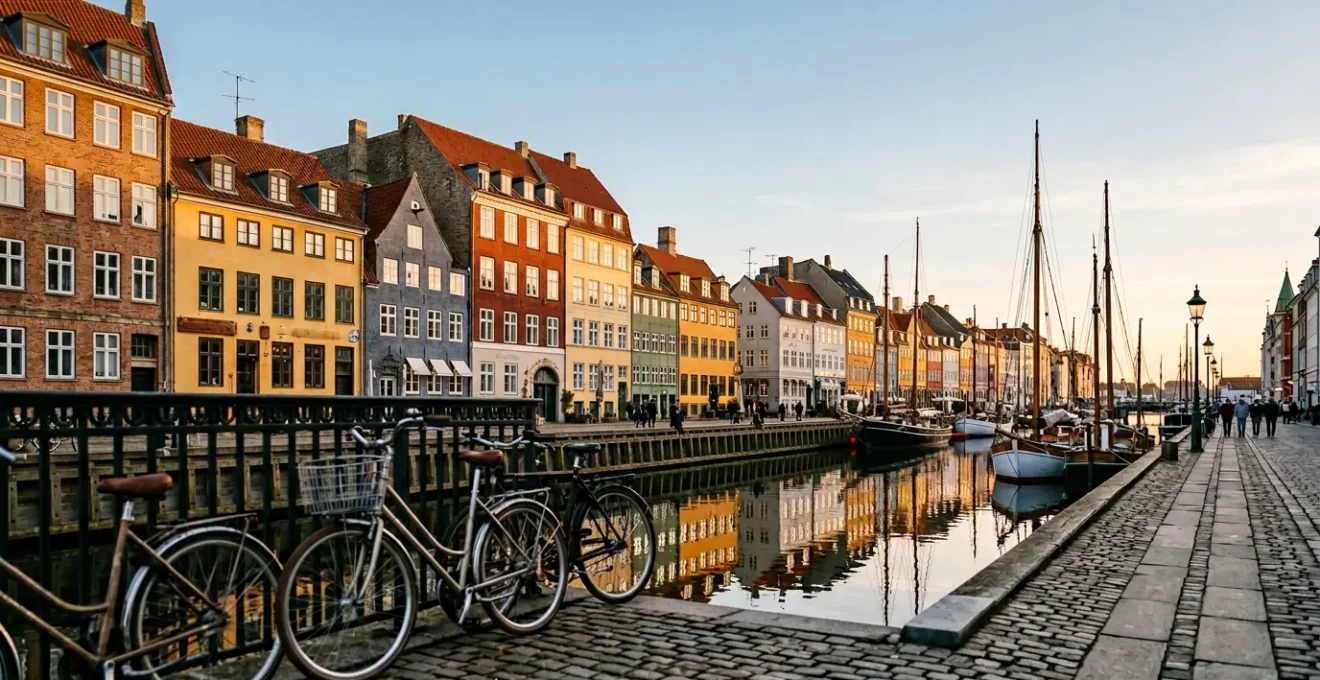
The key to a successful 48-hour Copenhagen trip isn’t a longer checklist, but a smarter strategy focused on efficiency and experience density.
- Prioritize activities by grouping them into geographical clusters to eliminate hours of wasted travel time.
- Make value-driven choices on transport and food, opting for local habits over tourist defaults to save money and time.
Recommendation: Instead of trying to see everything, focus on executing 2-3 well-planned “experience clusters” that align with your interests, ensuring a fulfilling trip without the exhaustion.
The promise of a 48-hour city break in a vibrant capital like Copenhagen is alluring for any busy professional. It’s a chance to disconnect and immerse yourself in a new culture. Yet, the reality is often a frantic race against the clock, a blur of metro rides and long queues, culminating in exhaustion rather than rejuvenation. Most travel guides compound this problem by presenting exhaustive lists of attractions, implicitly encouraging a “see it all” approach that is destined for failure in just two days. This method creates a high-pressure scavenger hunt, not a relaxing getaway.
The common advice to “buy a city card” or “rent a bike” remains superficial without a strategic framework. The real challenge isn’t just knowing what to see, but understanding how to experience it with maximum efficiency and enjoyment. What if the secret to a rewarding short trip wasn’t about adding more to your itinerary, but about being more intentional with your choices? This guide moves beyond the checklist mentality. We will focus on a strategic approach to planning, centered on eliminating common “friction points”—wasted time, energy, and money—to help you experience the best of Copenhagen like a seasoned traveler, not a stressed tourist.
This guide is structured to provide actionable strategies for every key decision you’ll make. From a clear cost-benefit analysis of travel passes to efficient sightseeing clusters and authentic, quick meal options, each section is designed to help you build a smarter, more enjoyable itinerary. Follow along to craft a 48-hour trip that is both memorable and manageable.
Summary: A Strategic Guide to Copenhagen in Two Days
- Copenhagen Card vs. Pay-As-You-Go: Which Is Cheaper for 2 Days?
- How to Group Attractions to Save 2 Hours of Commuting Time?
- The Little Mermaid: Why Do So Many Tourists Feel Underwhelmed?
- Where to Grab Quick but Authentic Lunch Near Major Attractions?
- What to Do If It Rains During Your Scheduled Walking Tour?
- How to Use Copenhagen’s Public Transport and Bikes Like a Local?
- Dragør or Hornbæk: Which Seaside Vibe Fits Your Personality?
- How to Enjoy Nyhavn Like a Local Instead of Just a Tourist?
Copenhagen Card vs. Pay-As-You-Go: Which Is Cheaper for 2 Days?
The first major decision for an efficient trip is managing costs and transport access. The Copenhagen Card, which offers free entry to numerous attractions and unlimited public transport, seems like a default choice. However, for a short, 48-hour trip, its value depends entirely on your planned experience density. If your itinerary involves visiting three or more high-priced attractions per day (like Tivoli Gardens, Rosenborg Castle, and a canal tour), the card quickly pays for itself. The convenience of not having to purchase individual tickets is a significant time-saver.
Conversely, if your plan is to soak in the city’s atmosphere, enjoy its green spaces, and visit only one or two key museums, a pay-as-you-go approach is often more economical. A City Pass for public transport combined with individual ticket purchases provides flexibility without the pressure to “get your money’s worth” by rushing between attractions. As one experienced traveler noted in a forum discussion, the pressure can be counterproductive.
I seldom find cards like this useful as you need to do more paid attractions than I have time and energy for.
– Travel Forum Contributor, Rick Steves Travel Forum Discussion
To make an informed decision, you must first outline a realistic itinerary. The following table breaks down a typical tourist’s expenses over two days, illustrating the potential savings.
| Expense Category | Pay-As-You-Go (DKK) | 48-Hour Copenhagen Card (DKK) |
|---|---|---|
| Attractions (Rosenborg, Tivoli, Museums, Boat Trip) | 1,458 | Included |
| Public Transport + Airport Transfer | 300 | Included |
| Total Cost | 1,758 | 969 |
| Savings | – | 789 DKK |
How to Group Attractions to Save 2 Hours of Commuting Time?
The single most effective strategy to avoid burnout in 48 hours is strategic clustering. Instead of zigzagging across the city based on a list of “must-sees,” group your activities into walkable, neighborhood-focused blocks. A well-planned cluster can save you up to two hours of commuting time, which can be reinvested into a longer museum visit, a relaxed coffee break, or simply a moment of quiet observation. This approach transforms your itinerary from a checklist into a flowing, logical journey.
Think of Copenhagen as a collection of distinct zones: the historic city center, the edgy Nørrebro, the maritime Christianshavn, and so on. By dedicating a morning or afternoon to a single zone, you minimize time spent on buses or the metro and maximize your time on the ground. This method increases your experience density, allowing you to absorb the unique character of each area.
The map above visualizes how different parts of the city can be bundled. For example, a “Royal Copenhagen” cluster is a highly efficient way to spend a morning. By starting at one point and following a logical path, you can tick off several major landmarks with minimal effort and maximum enjoyment. The key is to see attractions not as isolated points, but as connected parts of a larger neighborhood story.
Your Action Plan: The Royal Copenhagen Morning Cluster
- Start at Rosenborg Castle when it opens to see the Crown Jewels with fewer crowds.
- Walk through the adjacent King’s Garden (Rosenborg Gardens) for a peaceful 10-minute nature break.
- Head to Amalienborg Palace to witness the changing of the guard at noon.
- Visit the nearby Marble Church (Frederik’s Church) for its stunning architecture.
- End the cluster at the nearby Designmuseum Denmark for an immersive cultural experience.
The Little Mermaid: Why Do So Many Tourists Feel Underwhelmed?
The Little Mermaid is one of Copenhagen’s most famous icons, yet it’s also a frequent source of tourist disappointment. The primary reason is a mismatch between expectation and reality. Often imagined as a grand, imposing monument, the statue is surprisingly small. Official records document that it is only 1.25 metres (4.1 ft) tall and weighs 175 kilograms. Situated on a rock by the waterside, it can feel lost against the industrial backdrop of the harbor, especially when surrounded by crowds vying for the same photograph.
This feeling of being underwhelmed is a classic example of a “friction point” born from hype. Travelers often make a dedicated trip just to see it, investing significant time for a momentary and often disappointing payoff. As one visitor candidly shared:
Despite Copenhagen’s wealth of wonderful things to see and do, the Little Mermaid is incredibly underwhelming – somehow more disappointing than it is worth, even though it is free to visit. The statue is small and can leave travelers cold, sometimes literally, as Denmark can be chilly and queuing in salty seaspray on a windy day to get a selfie can leave you soaked and frozen.
– Visitor review on Explore.com
The solution is not to skip it, but to reframe its role in your itinerary. Instead of making the statue the destination, treat it as a starting point for a larger, more rewarding discovery walk. The surrounding Langelinie promenade and Kastellet fortress area offer far more in terms of scenery, history, and atmosphere. By bundling the mermaid with these other points of interest, you transform a potentially disappointing 15-minute visit into a fulfilling one-hour exploration.
- Visit the nearby Gefion Fountain, a powerful and dynamic sculpture that often leaves a greater impression.
- Explore the star-shaped Kastellet fortress, a beautifully preserved citadel with a public park and historic windmills.
- Appreciate the architecture of St. Alban’s Church, an idyllic English church by the water.
- Walk along the Langelinie promenade for beautiful harbor views away from the main crowds.
Where to Grab Quick but Authentic Lunch Near Major Attractions?
One of the biggest time sinks during a short city break is the midday meal. The default option is often a sit-down restaurant near a major attraction, which can be overpriced, tourist-focused, and slow. For the efficiency-minded traveler, the goal is a lunch that is both quick and authentic, allowing you to refuel without losing momentum. Copenhagen excels at this, offering numerous high-quality, fast options that are deeply rooted in Danish food culture. The quintessential choice is the smørrebrød, an open-faced sandwich on dense rye bread.
These are not simple sandwiches; they are culinary creations showcasing fresh, local ingredients. Grabbing a pre-prepared smørrebrød from a reputable bakery (bageri) or a dedicated shop is a fantastic way to eat like a local while saving precious time. Another excellent strategy is to head for one of the city’s food halls (torvehallerne), which gather dozens of vendors under one roof, offering everything from traditional fish cakes (fiskefrikadeller) to modern street food.
The key is to identify these spots in advance as part of your strategic clustering. Knowing where you can get a great bite within a five-minute walk of your target museum or palace eliminates the “where should we eat?” debate that can easily waste 30 minutes. A little planning transforms lunchtime from a logistical problem into a cultural experience. The following table pairs major attractions with nearby authentic lunch spots.
| Major Attraction | Quick Authentic Lunch Spot | Type | Distance |
|---|---|---|---|
| Christiansborg Palace | Meyers i Tårnet | Traditional smørrebrød in the palace tower | Inside attraction |
| Rosenborg Castle | Torvehallerne Market | Indoor food market with Danish specialties | 5-minute walk |
| Nørrebro District | Coffee Collective | Artisan coffee and pastries | In neighborhood |
| Refshaleøen Area | Reffen Street Food | Outdoor food market with local vendors | Waterfront location |
| Meatpacking District | Kødbyens Fiskebar | Fresh seafood and fish & chips | Central to district |
What to Do If It Rains During Your Scheduled Walking Tour?
Copenhagen’s weather is notoriously unpredictable, and rain can easily derail a carefully planned itinerary. A truly efficient traveler doesn’t hope for the best; they plan for the worst. Having a pre-prepared, modular rainy day plan is essential to avoid losing a precious afternoon huddled in a hotel room. This doesn’t mean creating a whole new itinerary, but rather having a “plug-and-play” indoor cluster ready to deploy. The Danish have a philosophy for this, encapsulated in a common saying.
No bad weather, only bad clothes, is a common Danish saying. Accordingly, every season in Copenhagen has its merits — thermals permitting.
– Local Copenhagen Guide, Mr & Mrs Smith Copenhagen Travel Guide
While the right gear helps, the right strategy is even better. Your backup plan should group several indoor attractions within a short walking distance of each other to minimize time spent in the rain. Copenhagen’s world-class museums and unique covered spaces are perfect for this. The National Gallery of Denmark (SMK), the Ny Carlsberg Glyptotek (with its stunning indoor Winter Garden), and the covered Torvehallerne food market can be combined to create a fulfilling and completely sheltered 3-4 hour experience.
The goal is to embrace the situation rather than fight it. Rain provides the perfect excuse to explore Copenhagen’s cultural depth and its famous concept of hygge—the art of coziness. Ducking into a dimly lit café for a coffee and pastry is not a failed plan; it’s a quintessential Danish experience.
- Pivot to Museums: Start at a major institution like the National Gallery of Denmark (SMK).
- Sheltered Lunch: Walk to the covered Torvehallerne food market for a dry and delicious lunch experience.
- Explore the Glyptotek: Spend the afternoon at Ny Carlsberg Glyptotek, where the glass-domed Winter Garden feels like an oasis.
- Embrace Hygge: End the day in a cozy café, turning the bad weather into a cultural opportunity.
How to Use Copenhagen’s Public Transport and Bikes Like a Local?
Mastering movement is fundamental to an efficient 48-hour trip. While Copenhagen is highly walkable, using its public transport and bike lanes like a local will elevate your experience from tourist to temporary resident. The city’s transport system—comprising the Metro, S-trains, and buses—is clean, punctual, and integrated. The key to seamless travel is the DOT Tickets app, which allows you to buy tickets and passes directly on your phone, bypassing queues at machines. The system operates largely on trust, so having a valid ticket ready on your app is all you need.
However, to truly experience Copenhagen, you must get on a bike. The city is designed for it, with over 380 km of dedicated, raised cycle tracks. Renting is easy and affordable through app-based services like Donkey Republic, with bike hubs scattered across the city. According to a Copenhagen travel guide, a 48-hour rental can be secured for as little as DKK 179. But renting a bike is only half the battle; riding it correctly is crucial.
Copenhagen’s bike lanes are like highways with their own set of unwritten rules. Not following them is the quickest way to identify yourself as a tourist and, more importantly, cause a potential hazard. Local efficiency here means understanding and respecting the etiquette to ensure a smooth, safe, and enjoyable ride for everyone. It’s about blending into the flow of the city.
- Use Hand Signals: Always raise your hand vertically to signal you’re stopping, and point left or right before turning.
- Stay in Your Lane: Keep to the right side of the bike lane. The left is for faster cyclists to overtake.
- Park Considerately: Never leave your bike where it could block a pedestrian path or a building entrance.
- Combine Transport: You can take your bike on the S-train (outside of rush hours) to explore areas further afield, like the coast, without getting exhausted.
Key Takeaways
- Burnout on short trips comes from poor planning, not a lack of time. Focus on efficiency.
- Group attractions into walkable “clusters” to save hours of commuting.
- Make value-driven choices for food and transport; local habits are often faster and more authentic than tourist defaults.
Dragør or Hornbæk: Which Seaside Vibe Fits Your Personality?
Even on a tight 48-hour schedule, a quick escape from the city center can provide a refreshing change of pace and a deeper sense of Denmark. The key is choosing a destination that offers a high return on your time investment. Two popular and accessible seaside options are Dragør and Hornbæk, but they cater to very different personalities. Your choice should be a deliberate one based on the vibe you’re seeking, not just proximity.
Dragør, located just a 25-minute bus ride from Copenhagen, is a journey back in time. It’s a beautifully preserved 18th-century fishing village with cobblestone streets, charming yellow houses with red-tiled roofs, and a tranquil harbor. It’s the ideal choice for those seeking peace, history, and photographic opportunities. The effort required is low, making it a perfect, gentle half-day trip.
Hornbæk, about an hour north by S-train, offers a completely different experience. It’s a lively, modern beach town known for its wide sandy beaches, bustling promenade, and chic cafés. This is the place for people-watching, beach strolls, and a more energetic, social atmosphere. While the travel time is longer, it delivers a classic Scandinavian beach resort feel.
Both trips are covered by the Copenhagen Card if you have one. The decision comes down to a simple question: are you looking for quiet historical charm or lively beachside energy? There is no wrong answer, only the one that best fits your personal travel style.
| Factor | Dragør | Hornbæk |
|---|---|---|
| Vibe | Historic, quiet, charming cobblestone lanes | Lively beach promenade, modern cafés, people-watching |
| Travel Time from Copenhagen | ~25 minutes by bus | ~60 minutes by S-train |
| Physical Effort | Low – compact walking area | Medium – beach walks, larger area |
| Best For | History lovers, photographers, peace-seekers | Beach enthusiasts, social travelers, active explorers |
| Copenhagen Card Coverage | Transport included | Transport included |
How to Enjoy Nyhavn Like a Local Instead of Just a Tourist?
Nyhavn, with its iconic multi-colored 17th-century townhouses lining the canal, is the postcard image of Copenhagen. It is an unmissable sight, but it is also a major tourist hub, with overpriced restaurants and dense crowds. The typical tourist experience involves taking a quick photo and dining at a waterfront table. To enjoy Nyhavn with local efficiency, however, you must adopt a different strategy that focuses on timing and location.
First, timing is everything. The magical, crowd-free moments at Nyhavn are during the early morning golden hour (before 9 AM) or late in the evening (after 7 PM). During these times, the soft light creates beautiful reflections on the water, offering a peaceful atmosphere and spectacular photo opportunities without the midday throngs. Visiting at these off-peak times transforms the experience from a hectic photo-op to a moment of genuine beauty and tranquility.
Second, locals know there are two sides to the canal. The side with the most restaurants is known as the “tourist side.” The opposite, sunnier side is where Copenhageners gather. The local secret is to buy a drink or snack from a nearby kiosk (kiosk) or supermarket (like the nearby 7-Eleven) and find a spot to sit along the canal wall. This simple act of enjoying a drink by the water is a quintessential Copenhagen experience—it’s cheaper, more authentic, and far more relaxing.
- Choose the “sunny side” of Nyhavn (the side with fewer restaurants) to relax.
- Buy your own drinks from a local shop and enjoy them canal-side.
- Visit during early morning or late evening for the best light and fewest crowds.
- Use Nyhavn as a starting point for a walk into the quieter, adjacent streets like Toldbodgade.
By applying these simple strategies, you shift from being a passive observer to an active participant in the city’s life. This is the essence of traveling efficiently and without burnout—it’s about finding the small, intentional choices that unlock a deeper, more authentic experience. The ultimate goal of a 48-hour trip is not to have a collection of photos, but a set of meaningful memories.
Now that you have the strategies to navigate Copenhagen with precision and purpose, the next logical step is to start building your own value-driven itinerary. Begin by mapping out your must-see attractions and applying these principles of clustering and efficiency.