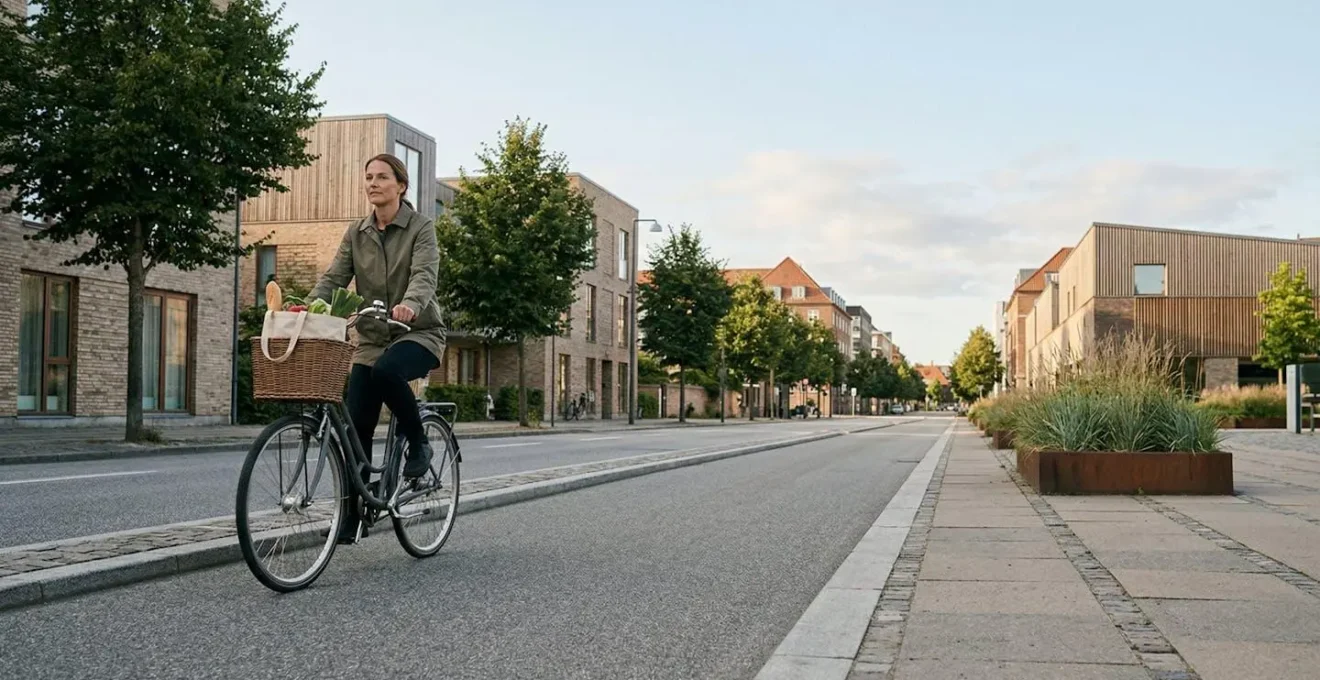
Sustainable travel in Copenhagen isn’t about giving things up; it’s about upgrading your experience by tapping into the city’s world-class green systems.
- Choose your accommodation and transport wisely by decoding eco-labels and transport passes like a local.
- Master the simple rules of waste sorting to participate in the city’s renowned circular economy.
Recommendation: Focus on integrating into Copenhagen’s sustainable lifestyle—from using the Too Good To Go app to exploring climate-resilient neighborhoods—to enrich your trip and travel with purpose.
The idea of a “zero-waste” city break often conjures images of sacrifice: spartan hostels, complicated recycling rules, and a constant feeling of missing out. For the eco-conscious traveler who also appreciates comfort and a touch of luxury, this creates a frustrating dilemma. You want your trip to Copenhagen to reflect your values, but not at the expense of the seamless, enriching experience you’ve been dreaming of. The internet is full of generic advice: “rent a bike,” “eat organic.” While well-intentioned, these tips barely scratch the surface of what makes Copenhagen a global leader in sustainability.
But what if the key to a truly sustainable and comfortable trip wasn’t about restriction, but about integration? What if, instead of trying to be a perfect tourist, you learned to think and act like a Copenhagener? The city’s green transition is built on sophisticated, user-friendly systems designed for a high quality of life. The real secret to a luxurious, zero-waste visit is not to avoid the system, but to master it. It’s about understanding the ‘why’ behind the city’s ambitions, which in turn makes the ‘how’ feel effortless and rewarding.
This guide, written from the perspective of a local consultant, will show you exactly how to do that. We’ll move beyond the clichés to give you the strategies to navigate Copenhagen’s green infrastructure with confidence. We’ll explore how to choose the right transport pass for your style, decode the hotel eco-labels that actually matter, and understand the simple recycling etiquette that will make you feel like a local. You’ll discover how participating in the city’s circular economy can actually save you money and lead to more authentic experiences, proving that in Copenhagen, sustainability and comfort are not mutually exclusive—they are one and the same.
This article breaks down the essential strategies for a seamless, sustainable trip. The following sections provide a clear roadmap, from understanding the city’s climate goals to experiencing its green innovations firsthand.
Summary: How to Plan a Zero-Waste Trip to Copenhagen Without Sacrificing Comfort?
- Why Does Copenhagen Aim to Be Carbon Neutral by 2025?
- How to Use Copenhagen’s Public Transport and Bikes Like a Local?
- Green Key vs. Nordic Swan: Which Eco-Label Matters for Your Hotel?
- The 3 Recycling Mistakes Tourists Make That Frustrate Locals
- Can You Save Money by Eating and Traveling Sustainably in Copenhagen?
- Bio-waste and Plastic: How to Master the 10-Type Sorting System?
- Nordhavn: What Does a Climate-Resilient Neighborhood Look Like?
- How to Witness the Future of Green Cities in Copenhagen?
Why Does Copenhagen Aim to Be Carbon Neutral by 2025?
Copenhagen’s ambition to become the world’s first carbon-neutral capital by 2025 isn’t just a marketing slogan; it’s a deeply ingrained municipal strategy that has been decades in the making. This goal is driven by a combination of political will, public support, and a pragmatic understanding that green investments yield a higher quality of life. The results are already tangible; the city’s climate accounting confirms a staggering 72.6% reduction in CO2 emissions by 2021 compared to its 2005 baseline. This success is built on four pillars: energy consumption, energy production, green mobility, and city administration initiatives.
For a visitor, this ambition translates into a city that functions as a “living laboratory” for green innovation. Much of this infrastructure is visible and interactive. One of the most impressive examples is the city’s district heating and cooling network. While district heating from waste-to-energy plants has been a cornerstone for decades, the cooling system is a modern marvel.
Case Study: District Cooling from Seawater
Since 2010, Copenhagen has pioneered a remote cooling system that circulates cold seawater through a closed-loop pipe network to cool commercial buildings. This significantly reduces the need for electricity-hungry air conditioning units, with the potential to cut 80,000 tons of CO2. As a visitor, you can see the results of this and other clean water policies by taking a dip in one of the pristine harbor baths, like the one at Islands Brygge.
You don’t need to be an engineer to appreciate these innovations. The city is designed to make its climate solutions part of the everyday landscape. Here are a few things you can easily spot:
- Harbor Baths: Public swimming areas like Islands Brygge and Kalvebod Bølge showcase the success of decades of investment in clean water.
- Climate Quarters (Klimakvarter): In areas like Østerbro, you can walk through streets retrofitted with green courtyards and rain-catchment gardens that manage stormwater and create beautiful community spaces.
- Cycle Superhighways: The iconic curb-separated bike lanes, complete with their own traffic lights, are the most visible symbol of the city’s commitment to green mobility.
- CopenHill: This waste-to-energy plant, with a ski slope and hiking trail on its roof, is a world-famous landmark demonstrating how industrial infrastructure can be transformed into a public amenity.
By understanding this context, you start to see the city not just as a beautiful destination, but as a blueprint for a sustainable future, where every bike ride and swim in the harbor is a small act of participation in a grand vision.
How to Use Copenhagen’s Public Transport and Bikes Like a Local?
While renting a bike is the most iconic way to experience Copenhagen, a truly seamless trip involves mastering the city’s integrated public transport system: the Metro, S-trains, buses, and even harbor buses. Acting like a local means choosing the right tool for the job. Bikes are perfect for short, sunny journeys through the city center, but the efficient and fully-automated Metro is your best friend for reaching outer neighborhoods or getting to the airport. The key to effortless travel is not just using these options, but choosing the right ticketing system for your itinerary, which avoids both hassle and unnecessary costs.
Forget buying single-trip paper tickets. Locals and savvy travelers use one of three main digital options. Your choice depends entirely on the length and style of your trip. The Copenhagen Card is designed for sightseers, bundling transport with museum access. The Rejsekort is a top-up card for longer stays, and the DOT Tickets App offers pay-as-you-go flexibility. Making an informed decision upfront is the first step to traveling with the confidence and ease of a Copenhagener.
This comparative table breaks down the options to help you choose the best fit for your travel style, ensuring your sustainable transport choices are also the most convenient and cost-effective. The data is based on information from Copenhagen’s official tourism organization.
| Pass Type | Best For | Key Benefits | Comfort Features |
|---|---|---|---|
| Copenhagen Card | The Planner – sightseeing-focused trips | Free public transport + free entry to 80+ attractions | No per-trip thinking, unlimited museum access reduces fatigue decisions |
| Rejsekort (Travel Card) | The Extended Visitor – stays over 5 days | Automatic best price calculation, works across Denmark | Check-in/check-out system, good for mixed metro-bus-train journeys |
| DOT Tickets App | The Spontaneous Explorer – flexible itinerary | Pay-as-you-go, mobile-only, easy to use | Buy tickets on-demand, no physical card needed, intuitive interface |
Ultimately, blending biking with the public transport system is the pinnacle of smart, sustainable urban travel. It allows you to cover more ground, adapt to the weather, and conserve your energy for what truly matters: enjoying the city.
Green Key vs. Nordic Swan: Which Eco-Label Matters for Your Hotel?
Choosing a sustainable hotel in Copenhagen is easy, as many proudly display eco-certifications. However, for the discerning traveler, it’s important to know what these labels actually mean. The two most common and reputable certifications you’ll encounter are Green Key and the Nordic Swan Ecolabel. While both are excellent, they have slightly different focuses. Green Key is an international tourism-specific standard with strong criteria on communication and guest involvement. The Nordic Swan is a broader Nordic product and service label known for its extremely rigorous, holistic life-cycle criteria, covering everything from energy use to the chemicals in cleaning products.
Instead of getting lost in the details, the best approach is to recognize that any hotel with one of these labels has already made a significant commitment. Your job as a conscious traveler is to look for the tangible proof that backs up the certificate on the door. True sustainability is woven into the guest experience, often in subtle, comfort-enhancing ways. Think refillable, high-quality toiletries instead of tiny plastic bottles; organic, locally-sourced breakfast buffets; and clever water-saving showerheads that don’t compromise on pressure.
These details, as shown above, are where sustainable principles meet luxury and comfort. Rather than just taking a label at face value, a savvy traveler can gently probe a little deeper. This isn’t about being confrontational; it’s about showing genuine interest and making an informed choice that aligns with your values. Most high-quality sustainable hotels are proud of their efforts and happy to share details.
Your Greenwashing Litmus Test: 4 Questions for Your Hotel
- Energy Source: Ask “Is your electricity contract 100% renewable?” Many top-tier certified hotels have moved beyond simple efficiency to sourcing certified wind or solar power.
- Food Waste Management: Ask “How do you minimize food waste from your breakfast buffet?” Look for answers mentioning partnerships with apps like Too Good To Go or on-site composting.
- Water Systems: Ask “Do you use water-saving technology beyond low-flow fixtures?” Advanced hotels might mention greywater recycling for toilets or innovative systems like water-atomizing showers.
- Chemical Standards: Ask “What percentage of your cleaning products carry an ecolabel?” The Nordic Swan, for example, requires the majority of daily-use chemicals to be certified.
Asking these questions turns your choice of accommodation from a simple transaction into a rewarding interaction, ensuring your stay is not just comfortable but also genuinely contributes to the city’s green ethos.
The 3 Recycling Mistakes Tourists Make That Frustrate Locals
Participating in Copenhagen’s recycling system is one of the easiest ways to live like a local during your stay. The city has invested heavily in a comprehensive waste management system, and its success relies on everyone doing their part correctly. While the 10-fraction system can seem daunting, tourists only need to master a few basics to make a positive impact. However, a few common misconceptions often lead to well-intentioned mistakes that can contaminate entire batches of recycling. Avoiding these errors is a sign of respect for the local effort and the infrastructure that underpins it.
The city’s efforts have paid off, as the city’s source separation system achieved a 45% recycling rate in 2018, a significant jump from 27% in 2010. This progress is a point of civic pride, which is why seeing recycling bins used incorrectly can be a source of quiet frustration for residents. The good news is that the main tourist pitfalls are easy to avoid once you understand the logic behind the rules. Here are the three most common errors and how to get it right:
- Mistake #1 – The Pizza Box Illusion: It’s a classic Copenhagen experience to grab a pizza and eat it by the lakes or harbor. However, that greasy pizza box is a recycling nightmare. Oil contaminates the paper recycling stream, making the cardboard unusable. The solution: Place greasy cardboard in the ‘Restaffald’ (residual waste) bin. It will be sent to a waste-to-energy plant like CopenHill and converted into district heating and electricity.
- Mistake #2 – “Wish-cycling” Small Items: Tossing small plastic items like bottle caps, coffee pods, or candy wrappers into the plastic bin feels right, but it’s counterproductive. These items are too small for the sorting machinery and fall through the cracks, often contaminating other streams. The solution: A good rule of thumb is if it’s smaller than your fist, it likely belongs in ‘Restaffald’. Only larger, rigid plastic containers should go in the ‘Plast’ bin.
- Mistake #3 – The Rinsing Dilemma: Many tourists, wanting to do the right thing, either don’t rinse containers at all or scrub them spotlessly. The local standard is a happy medium. The solution: A quick rinse with cold water is sufficient to remove most food residue. The container doesn’t need to be sparkling clean. This approach respects both the recycling process and conserves water resources.
By making these small adjustments, you’re no longer just a visitor; you’re an active participant in the city’s celebrated circular economy.
Can You Save Money by Eating and Traveling Sustainably in Copenhagen?
Copenhagen has a reputation for being an expensive city, leading many travelers to believe that a sustainable trip must be a costly one. This is a common myth. In reality, embracing Copenhagen’s sustainable culture can lead to significant savings and more authentic experiences, all without sacrificing quality. The key is to tap into the city’s circular economy and adopt the habits of locals, who are masters of getting value while minimizing waste. From food to drink, sustainable choices are often the most budget-friendly.
A perfect example is the Danish bottle deposit system (Pant). When you buy a can or bottle, you pay a small deposit (1-3 DKK). You get this money back when you return the empty container to a reverse vending machine found in any supermarket. This system is incredibly effective; since its origins, Denmark’s deposit-return system dating back to 1922 has achieved a staggering 92% return rate. For a traveler, this means every drink you buy comes with a small, built-in rebate. Another fundamental tip is to always carry a reusable water bottle. The tap water in Copenhagen is among the best in the world—clean, safe, and delicious. Buying bottled water is not only wasteful but also a completely unnecessary expense.
The biggest savings, however, come from tackling food waste. Copenhagen is the birthplace of the Too Good To Go app, a platform that connects users with restaurants, bakeries, and hotels selling surplus food at a heavy discount. This is a game-changer for budget-conscious foodies.
Case Study: High-Quality Meals with Too Good To Go
The Too Good To Go app is ubiquitous in Copenhagen. It allows you to purchase “Magic Bags” of surplus food from top-tier bakeries, popular cafes, and even luxury hotel breakfast buffets for 30-50% of the original price. This isn’t leftover scraps; it’s high-quality food that would otherwise be discarded. By using the app, you can enjoy delicious Danish pastries, hearty lunches, or even a hotel-quality breakfast for a fraction of the cost, turning an act of sustainability into a direct financial and culinary win.
By adopting these simple local habits, you not only reduce your environmental impact but also free up your budget for other unique experiences the city has to offer.
Bio-waste and Plastic: How to Master the 10-Type Sorting System?
For a visitor staying in an apartment or Airbnb, Copenhagen’s 10-fraction waste sorting system can look intimidating. You’ll often find a row of bins for different materials: paper, cardboard, metal, glass, plastic, food waste, and more. The good news is that you don’t need to be an expert overnight. By focusing on the “Big Four” waste types that a tourist is most likely to generate, you can participate effectively and confidently. The city has made it easy, with tourists having access to 300+ sorting islands and 550 glass containers publicly available, in addition to the bins at your accommodation.
The main goal is to separate organic and recyclable materials from residual waste. This is crucial because materials placed in the wrong bin can contaminate the recycling stream, while organic waste sent to landfill produces methane, a potent greenhouse gas. In Copenhagen, however, both residual and organic waste are valuable resources. Residual waste (Restaffald) is incinerated in advanced waste-to-energy plants to produce electricity and district heating for the city. Food waste (Madaffald) is processed to create biogas for city buses and nutrient-rich fertilizer for agriculture. Understanding this “waste-as-resource” philosophy is the key to mastering the system.
To avoid feeling overwhelmed, simply focus on these four main categories. Getting these right covers the vast majority of waste you’ll produce.
- Madaffald (Food Waste): This is for all organic kitchen waste—fruit and vegetable peels, leftover food, coffee grounds, and tea bags. Use the provided green bio-bags, tie a secure knot to prevent odors, and place them in the designated bin. Up to 95% of this material is converted into biogas and fertilizer.
- Plast (Plastic): This is for clean, rigid plastic containers, such as water bottles, yogurt pots, and salad trays. Remember the “larger than your fist” rule. All containers must be given a quick rinse with cold water.
- Papir (Paper): This bin is for clean and dry paper only, like newspapers, magazines, and office paper. It must be kept separate from cardboard. Make sure to remove any plastic film from magazines.
- Restaffald (Residual Waste): This is the catch-all for everything else. This includes greasy cardboard (like pizza boxes), small plastic items, coffee cups, chip bags, and wet paper towels. This material is not wasted but becomes a vital fuel source for the city’s heating.
This simple act of sorting connects you directly to the city’s circular economy, turning your daily waste into a valuable resource for the community.
Nordhavn: What Does a Climate-Resilient Neighborhood Look Like?
To truly understand Copenhagen’s forward-thinking approach to urban development, a visit to Nordhavn is essential. This former industrial port is being transformed into a state-of-the-art sustainable neighborhood, designed from the ground up to be climate-resilient. It serves as a real-world model for how cities can adapt to the challenges of sea-level rise and extreme weather while simultaneously creating a highly desirable place to live. For a visitor, walking through Nordhavn is like stepping into the future of urban design, where sustainability, functionality, and aesthetics are seamlessly integrated.
The neighborhood is built on the “Five-Minute Principle,” meaning all essential amenities—grocery stores, cafes, schools, and public transport—are located within a five-minute walk from any given residence, drastically reducing car dependency. But beneath the surface, Nordhavn is a hub of technological innovation, serving as a full-scale laboratory for smart energy solutions. This makes it a fascinating destination for anyone interested in the practical application of green technology.
Case Study: EnergyLab Nordhavn
Nordhavn is home to the EnergyLab Nordhavn project, a full-scale smart energy laboratory. This initiative demonstrates how to integrate electricity, heat, energy-efficient buildings, and electric transport into a single intelligent system. The buildings and energy grid communicate to optimize the use of renewable energy from wind turbines, storing surplus power in batteries (including those in electric vehicles) and using it when demand is high. This invisible “smart grid” is a core part of the neighborhood’s resilience and efficiency.
Even without a technical background, you can easily observe the principles of climate resilience in action. A self-guided tour reveals how thoughtful design prepares the district for a changing climate:
- Elevated Ground Levels: Notice that new buildings and public spaces are built on land raised significantly higher than the old harbor, a direct response to projected sea-level rise.
- Green and Blue Infrastructure: The area is dotted with green spaces and canals that are not just for beauty. They are Sustainable Urban Drainage Systems (SUDS) designed to absorb and manage heavy rainfall, preventing flooding.
- Waterfront Access: The transformation of the industrial waterfront into public harbor baths, promenades, and recreational areas demonstrates a commitment to creating a “blue city” that embraces its relationship with the water.
A trip to Nordhavn offers a powerful and optimistic vision of how urban life can evolve to be both more sustainable and more enjoyable.
Key takeaways
- Sustainability in Copenhagen is an upgrade, not a sacrifice, focused on integrating into smart systems.
- Mastering local etiquette, from transport passes to recycling, enhances your trip and shows respect.
- Embrace the circular economy via apps like Too Good To Go and the bottle deposit system to save money and live like a local.
How to Witness the Future of Green Cities in Copenhagen?
After understanding the systems and strategies that underpin Copenhagen’s green identity, the final step is to experience it all firsthand. A trip to Copenhagen offers a unique opportunity to witness the future of sustainable urban living, not as a museum piece, but as a vibrant, functioning reality. By curating your itinerary around specific themes, you can move beyond the typical tourist trail and engage directly with the people and projects shaping this green metropolis. This approach transforms your visit from a passive sightseeing tour into an active exploration of a city that lives its values.
Engaging with these initiatives is often as simple as choosing where you shop, eat, or even go for a paddle. Many of these experiences are fun, unique, and deeply memorable. As noted in the Azure Road Sustainable City Guide, one standout example is GreenKayak, which “offers free boats in exchange for hauling trash from the water — a system that has now spread to other European cities.” This simple, brilliant idea perfectly captures the Copenhagen spirit of practical, community-driven environmentalism.
“GreenKayak offers free boats in exchange for hauling trash from the water — a system that has now spread to other European cities.”
– Azure Road Sustainable City Guide, Copenhagen Sustainable City Guide: Design for Living
To structure your exploration, consider dedicating a day or an afternoon to one of these thematic tours, which you can easily do on your own:
- The Circular Economy Tour: Start your day with a coffee and pastry from a Too Good To Go partner, visit LØS Market in Nørrebro or Vesterbro to see package-free shopping in action, browse the high-end second-hand boutiques on Jægersborggade, and have dinner at a zero-waste restaurant like Ark.
- The Blue City Tour: Experience the harbor’s cleanliness with a free GreenKayak trip or a swim at Islands Brygge. Take the Harbor Bus (line 991 or 992) for a scenic and affordable tour of the waterfront, observing the city’s water management from a new perspective.
- The Community & Food Tour: Visit Øens Have, a sprawling urban farm and eatery on an island in the city, explore a local community garden (kolonihave), and support a B Corp-certified business like Coffee Collective, known for its transparent and ethical sourcing.
Ultimately, a sustainable trip to Copenhagen is about making conscious choices that connect you more deeply with the city’s innovative and hopeful vision for the future. Start planning your journey today by integrating these strategies into your itinerary.