Culture & Scandinavian Heritage
Denmark’s cultural landscape resembles a carefully woven tapestry, where threads from the Viking Age, medieval kingdoms, and modern Scandinavian identity intertwine to create something uniquely compelling. For travelers seeking more than postcard-perfect views, understanding this Nordic nation’s heritage reveals why certain social customs feel refreshingly different, why design seems effortlessly elegant, and how a relatively small country has preserved such an extraordinary historical footprint.
This exploration of Scandinavian culture through Denmark’s lens covers everything from the practical—navigating castle opening hours and deciphering ancient runestones—to the philosophical: what exactly makes Danish culture distinctly Scandinavian yet unmistakably its own? Whether you’re planning your first visit or seeking deeper context for familiar landmarks, these interconnected cultural elements will transform random sightseeing into meaningful discovery.
The Living Legacy of Royal Denmark
The Danish monarchy represents one of the world’s oldest continuous royal lineages, but what makes it fascinating for modern visitors isn’t just its age—it’s how visibly this heritage shapes contemporary Copenhagen and beyond. Unlike royal history confined to museum displays, Denmark’s monarchical past remains architecturally alive.
Understanding this legacy requires identifying the key monarchs who fundamentally altered the urban landscape. Christian IV, often called the “Builder King,” transformed Copenhagen in the early 1600s with structures that still define the skyline. His vision created Rosenborg Castle, the Round Tower, and the iconic stock exchange building with its distinctive dragon-spire tail. Frederick V championed the elegant Rococo district of Frederiksstaden, centered on the Amalienborg Palace complex that remains the royal family’s residence.
For visitors, the challenge isn’t finding royal sites—they’re everywhere—but rather creating a coherent narrative route that reveals how architectural styles evolved alongside Denmark’s political transformation from absolute monarchy to constitutional kingdom. The modern relevance of the Royal Family extends beyond ceremonial functions; they’ve become cultural ambassadors who blend tradition with surprisingly accessible public engagement, though accessing certain collections still requires knowing which palaces open their private wings seasonally.
Viking Heritage: Beyond the Myths
The Viking Age suffers from a peculiar problem: everyone recognizes the term, but few understand the actual timeline or the diverse roles within Viking society. This isn’t ancient history gathering dust—it’s Denmark’s most marketable heritage brand, which unfortunately means authentic experiences coexist with tourist-trap caricatures.
The Viking era spanned roughly from 793 to 1066 CE, beginning with the Lindisfarne raid and ending around the Norman Conquest. Yet this three-century period contained farmers, traders, craftspeople, and explorers—not just the raiders who dominate popular imagination. Understanding this complexity transforms museum visits from “looking at old stuff” to recognizing sophisticated navigation technology, intricate social hierarchies, and long-distance trade networks.
Denmark hosts exceptional Viking museums, but choosing between them requires knowing what aspects fascinate you most:
- The National Museum in Copenhagen offers comprehensive context with the largest artifact collection
- The Viking Ship Museum in Roskilde showcases five original vessels recovered from the fjord, demonstrating different ship types for warfare, cargo, and fishing
- Regional museums near burial sites provide intimate connections to specific communities
Avoiding inauthentic souvenirs means recognizing that genuine Viking-era jewelry featured intricate animal motifs and geometric patterns—not the clunky horned helmets (which, incidentally, Vikings never actually wore) sold in tourist shops. For those with Scandinavian ancestry, several museums offer resources for tracing lineage through patronymic naming patterns still evident in modern surnames.
Medieval Layers in Modern Cities
Copenhagen presents a paradox: a thoroughly modern metropolis that conceals remarkable medieval fragments beneath and between its contemporary architecture. The challenge for curious travelers lies in locating these hidden layers when the city’s original layout has been repeatedly obscured by catastrophic fires and deliberate urban renewal.
The Great Fire of 1728 destroyed roughly one-third of medieval Copenhagen, followed by another devastating fire in 1795. What survived offers precious clues to the original city structure. The Latin Quarter preserves the medieval street pattern, with narrow lanes that once followed property boundaries dating back centuries. The oldest standing buildings—including sections of the Church of Our Lady and the fortress remnants under Christiansborg Palace—require knowing where to look.
Subterranean ruins offer the most dramatic connections to medieval life. Beneath the current Christiansborg Palace, extensive remains of Bishop Absalon’s original 1167 castle and subsequent medieval fortifications are open for exploration. These casemates and foundations reveal construction techniques, defensive strategies, and the surprising compactness of the original settlement.
Mapping these sites into a cohesive walking route creates a narrative journey: beginning with the earliest settlement around present-day Christiansborg, following the expansion of city walls, and understanding how medieval Copenhagen’s position as a strategic harbor between the North Sea and Baltic fueled its growth from bishop’s castle to capital.
What Defines Scandinavian Culture?
The concept of “Scandinavian identity” can seem frustratingly vague until you recognize it’s less about specific customs and more about shared values manifesting differently across Norway, Sweden, and Denmark. Think of it as three siblings raised in the same household who developed distinct personalities while retaining family resemblances.
Denmark’s interpretation of Scandinavian social models emphasizes the balance between collective welfare and individual freedom. The concept of “hygge”—often poorly translated as “coziness”—actually reflects deeper cultural priorities around creating intimate, authentic social moments. Similarly, the “Law of Jante” (though Norwegian in origin) influences Danish attitudes toward modesty and equality in ways that surprise visitors accustomed to more hierarchical cultures.
Open-air museums and heritage centers provide tangible context for these abstract concepts. The Open Air Museum north of Copenhagen reconstructs buildings from different regions and time periods, demonstrating how geography shaped daily life. The maritime connection that binds all Scandinavian nations becomes visceral when you walk through reconstructed fishing villages and see how the sea influenced everything from architecture to diet.
Denmark’s unique traditions within the broader Scandinavian framework include specific food customs (the Christmas rice pudding with a hidden almond), celebration dates that differ from Swedish or Norwegian calendars, and a particular approach to design that favors warmer wood tones compared to Sweden’s often cooler aesthetic. Heritage expressed through design isn’t decorative nostalgia—it’s a living philosophy where form serves function while honoring craft traditions.
Jelling: Denmark’s Foundational Site
If Denmark had a birth certificate, it would be the runestones at Jelling. This small Jutland town hosts monuments that mark Denmark’s transformation from scattered tribal territories into a unified kingdom embracing Christianity—a pivotal moment around 965 CE that established the nation’s identity.
The larger Jelling stone, erected by Harald Bluetooth, features Denmark’s oldest royal monument and earliest reference to the country by name. But understanding its significance requires more than reading the translation; you need to visualize the massive palisade that once encircled these monuments, imagine the original wooden church beneath the present stone building, and grasp the political implications of a Viking king declaring his realm Christian.
Planning logistics from Billund Airport (the nearest international hub) takes about 30 minutes by car. The experience center provides excellent context, though some visitors prefer heading straight to the burial mounds—two massive earthen structures that predate the stones and offer physical connection to Bronze Age and Viking-era burial practices. Climbing these mounds isn’t strenuous, but the perspective from atop them helps comprehend the site’s ceremonial importance.
The runestones themselves feature intricate carvings including Denmark’s earliest depiction of Christ, demonstrating how Viking artistic traditions merged with Christian iconography. Deciphering these ancient messages in person, even with interpretive panels, creates a profound sense of historical continuity impossible to achieve through photographs.
Castles and Fortresses of the North
Scandinavia’s castles differ fundamentally from French châteaux or German Schlösser—Nordic fortresses arose from defensive necessity in harsh climates, later evolving into Renaissance showcases of royal power. Denmark’s castle landscape offers remarkable variety accessible primarily by train, making multi-castle tours surprisingly practical.
Comparing the major fortresses reveals different historical purposes:
- Kronborg Castle (Helsingør): Strategic toll fortress controlling the narrow Øresund strait, later immortalized as Elsinore in Shakespeare’s Hamlet
- Frederiksborg Castle (Hillerød): Renaissance palace demonstrating royal wealth, now housing the Museum of National History
- Egeskov Castle (Funen): Best-preserved Renaissance water castle in Europe, surrounded by moat defenses
Kronborg deserves particular attention for the literary-historical gap it represents. Shakespeare never visited Denmark, and his “Hamlet” draws from earlier legends, but the castle has embraced this connection with annual performances. The castle’s casemates—underground passages and soldiers’ quarters—provide atmospheric exploration opportunities, while the best photo angles require timing your visit when tour groups aren’t clustered on the main courtyard.
Practical considerations matter: renovation schedules occasionally close sections, gardens peak in late spring through early summer, and certain castles offer cannon-fire demonstrations at specific times. Kronborg pairs naturally with the adjacent Maritime Museum, built ingeniously into a former dry dock, creating a full-day cultural immersion in Helsingør.
Danish Art, Design, and Creative Expression
Denmark’s contemporary art scene extends far beyond the famous Louisiana Museum, though that institution remains essential for understanding how Danish culture integrates art into daily life. Located on the North Zealand coast, Louisiana’s architecture—where modernist galleries open onto sculpture gardens overlooking the Øresund—exemplifies the intersection of art, design, and public space that characterizes Danish cultural philosophy.
Navigating Copenhagen’s modern art scene reveals emerging artists in neighborhoods like Vesterbro and Nørrebro, where independent galleries showcase work that challenges the cozy “hygge” stereotype. Public art installations appear throughout the city, from major commissioned sculptures to temporary interventions that blur boundaries between art and urban planning.
Danish design’s golden age—roughly 1945-1975—produced internationally influential architects and furniture designers whose work still feels contemporary. Understanding key figures transforms casual museum browsing into recognition of revolutionary ideas:
- Arne Jacobsen: His Egg and Swan chairs demonstrate sculptural approaches to functional furniture
- Hans Wegner: Over 500 chair designs emphasizing wood craftsmanship and ergonomic comfort
- Finn Juhl: Pioneered furniture as individual art pieces rather than coordinated sets
Visiting Finn Juhl’s house in suburban Copenhagen provides intimate context for how these designers lived with their creations. The Design Museum offers comprehensive historical coverage, while contemporary showrooms demonstrate how these mid-century principles influence current production. Collectors face choices between vintage originals (expensive, sometimes fragile) and authorized reissues that honor original designs with modern manufacturing precision.
Understanding Danish Social Etiquette
Danish social norms operate on principles that can baffle visitors from more hierarchical or effusive cultures. The confusion often stems from misinterpreting Danish directness as coldness or their respect for personal space as unfriendliness—when actually these behaviors reflect deeply held values about authenticity and equality.
Punctuality isn’t just politeness—it’s a form of respect. Arriving 10-15 minutes late to a social gathering might be fashionable elsewhere, but in Denmark it signals you don’t value others’ time. This precision extends to business meetings, dinner invitations, and even casual coffee meetups. The flip side? Danes rarely expect lengthy arrivals or departures with elaborate greetings; brief, genuine exchanges are preferred.
Gender equality nuances manifest in unexpected ways. Offering to pay for a woman’s meal can be interpreted not as chivalry but as suggesting she can’t afford her own—splitting bills (“going Dutch,” ironically) is standard. Holding doors or offering seats based solely on gender may feel outdated; the courtesy extends to anyone regardless of gender.
Personal space preferences mean:
- Sitting beside a stranger on public transport when other seats are available seems intrusive
- Small talk with service workers or strangers often stays minimal and functional
- Physical greetings among acquaintances typically involve handshakes, not hugs or cheek kisses (reserved for close friends)
The flat hierarchy in Danish workplaces and social settings means managers and employees often interact as equals, first names are standard regardless of age or position, and direct disagreement doesn’t indicate disrespect. Gift-giving etiquette remains relatively simple: arrive at dinner parties with wine or flowers (odd numbers, unwrapped), but excessive or expensive gifts can create uncomfortable obligation.
Cultural Celebrations and Seasonal Traditions
Danish cultural life pulses with seasonal rhythms that connect contemporary celebrations to ancient agricultural cycles and folklore. Understanding these traditions transforms them from tourist observations into meaningful cultural participation.
The Copenhagen Jazz Festival exemplifies how Danes embrace cultural events as communal experiences. This massive summer music event sprawls across multiple venue types—from concert halls to street corners—making strategic choices essential. Booking tickets for headliner shows requires advance planning, but the festival’s spirit lives in spontaneous jam sessions at smaller clubs. The Winter Jazz edition offers a cozier, more intimate version for those visiting during darker months, and surprisingly, navigating the festival with kids is welcomed, with specific family-friendly programming.
Traditional folklore celebrations maintain visibility despite Denmark’s modern secular culture. Midsummer Eve (Sankt Hans Aften) features bonfires and symbolic witch-burning effigies—a tradition connecting to pre-Christian solstice celebrations and later Christian overlay. Communities gather at beaches and parks as darkness finally arrives around 10 PM, singing traditional songs while the bonfire blazes.
Other seasonal traditions worth experiencing include:
- Fastelavn (February/March): Children dress in costumes and “beat the cat out of the barrel”—a piñata-like activity with medieval origins
- Mortensaften (November 10): Roast goose dinner commemorating Saint Martin, a harvest celebration featuring specific menu traditions
- Lucia processions (December 13): Candlelit celebrations marking the return of light during the darkest period
These celebrations reveal how Danish culture maintains connections to its past without becoming museum pieces—traditions evolve while preserving core meanings that still resonate with contemporary participants.
Runestones and Ancient Communication
Runestones function as Denmark’s earliest written records, yet they’re fundamentally different from modern writing—they’re monuments, declarations, and memory-markers carved to endure. Learning to read these messages from ancestors requires understanding both the runic alphabet and the cultural context that motivated their creation.
The runic alphabet (futhark) used in Denmark contains 16 characters, each representing a sound but also carrying symbolic meanings. While full translation requires expertise, recognizing common words like “raisa” (raised), “stain” (stone), and “aft” (in memory of) allows visitors to pick out basic meanings. The Jelling stones represent the most famous examples, but the Glavendrup stone on Funen demonstrates typical memorial purposes: a son commemorating his father and threatening curses on anyone who damages the monument.
Understanding the purpose of runestones reveals they weren’t casual messages but significant investments of labor and resources. They marked territorial claims, commemorated notable individuals, proclaimed conversions to Christianity, or announced construction projects. Their placement along roads and at gathering sites ensured maximum visibility.
For visitors seeking authentic encounters with these ancient texts:
- Learn to identify authentic stones versus modern replicas (museums often display casts while originals remain in protected outdoor settings)
- Visit stones in their original contexts when possible—the landscape often explains placement choices
- Photograph carefully without touching—oils from hands damage the carved surfaces
- Use interpretive materials at sites, but also try to observe the craftsmanship and artistic choices independent of translation
Protecting these irreplaceable artifacts requires visitor awareness. Some heavily-touristed stones now sit behind barriers, while others in remote locations remain accessible but vulnerable. The ethical approach balances access with preservation, ensuring future generations can also experience these tangible links to Scandinavia’s pre-Christian past.
Denmark’s cultural heritage resists simple categorization—it’s simultaneously ancient and contemporary, distinctly Danish yet broadly Scandinavian, carefully preserved yet continually evolving. For travelers, this complexity offers extraordinary depth: every castle visit connects to living monarchy, every design museum reveals ongoing philosophy, every folk tradition maintains links to seasonal rhythms that shaped Northern European life for millennia. The key to meaningful engagement lies not in checking boxes on a sightseeing list, but in recognizing how these cultural threads interconnect, creating a living heritage that continues to shape both Danish identity and Scandinavia’s global cultural influence.

How to Identify Authentic Mid-Century Chairs in Vintage Shops?
Spotting an authentic mid-century chair isn’t about a simple checklist; it’s about developing an appraiser’s eye to read the story embedded in the object itself. True value is revealed by understanding the designer’s structural philosophy—the “why” behind the form, not…
Read more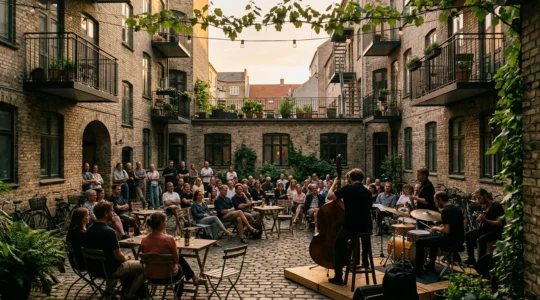
Copenhagen Jazz Festival: How to Find Free Concerts in Hidden Courtyards?
The secret to the free Copenhagen Jazz Festival isn’t a map of venues; it’s a timetable of vibes. Afternoons are for sprawling, sun-soaked park concerts. Golden hour is for intimate, magical courtyard gigs. Late nights are for raw, improvisational jam…
Read more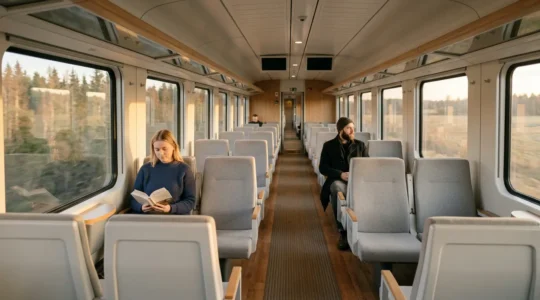
How to Crack the Code of Scandinavian Silence in Public Spaces?
That quiet, distant behavior from Scandinavians isn’t a personal rejection; it’s a sophisticated social code signaling respect and equality. Public silence and physical distance are ways of granting personal autonomy, a core cultural value that is seen as a gift,…
Read more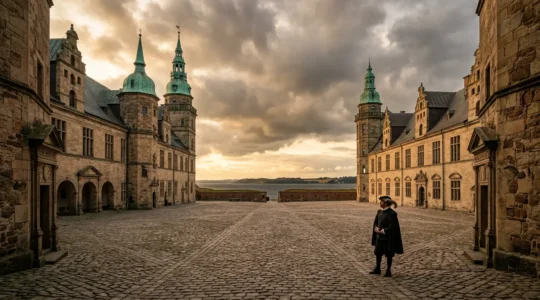
Hamlet Live: Is the Interactive Theater at Kronborg Worth the Extra Cost?
The ‘Hamlet Live’ experience is not an ‘extra’—it is the very soul of a visit to Kronborg, transforming a historical site into a breathtaking piece of immersive theatre. The performance is included with the standard castle ticket, making the “extra…
Read more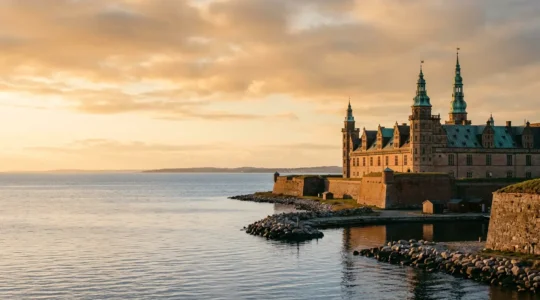
Kronborg or Frederiksborg: How to Design Your Perfect Castle Day Trip from Copenhagen
Choosing between Kronborg and Frederiksborg is less about the destination and more about the story you wish to experience. Kronborg Castle offers dramatic, literary immersion with its stark fortress walls pounded by the sea winds of Elsinore. Frederiksborg Castle provides…
Read more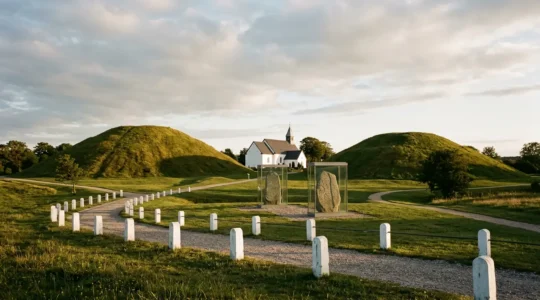
Jelling: Reading the Living Manuscript of Denmark’s Birth
The Jelling Monuments are not a static ‘birth certificate’ but the active landscape where the story of Denmark’s reinvention was physically written, overwritten, and buried. The site must be read as a strategic space, where Viking power was converted into…
Read more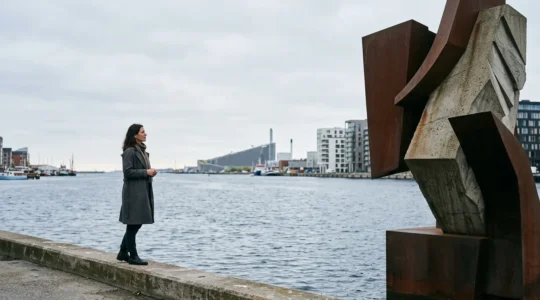
Beyond the Little Mermaid: A Curated Guide to Contemporary Art in Copenhagen
Experiencing Copenhagen’s art scene is not about a checklist of sights; it’s about understanding the city’s philosophy of ‘poetic pragmatism,’ where art is woven into the very fabric of daily life. World-class art isn’t confined to museums; it’s found in…
Read more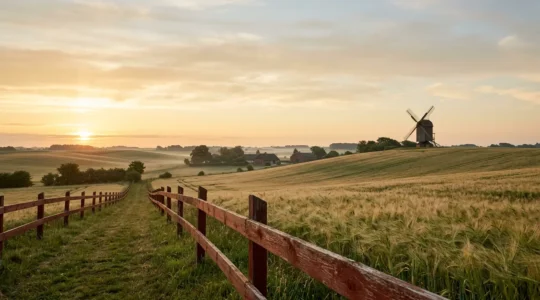
What Makes Danish Heritage Unique in Scandinavia? A Deep Dive
Danish identity is not defined by hygge, but by a deeply ingrained social contract built on collective trust and pragmatism. High taxes are widely accepted as an investment in shared security and equality, not a burden. Minimalist design and public…
Read more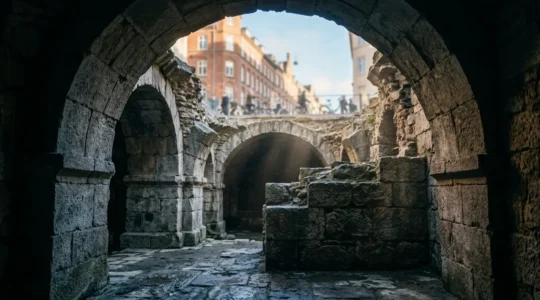
Where to Find the Last Traces of Medieval Copenhagen After the Fires?
Most believe Copenhagen’s medieval past was erased by its great fires. The truth is more complex: it wasn’t lost, but buried. This guide reveals how to read the clues left behind by destruction and rebuilding. By understanding the forces of…
Read more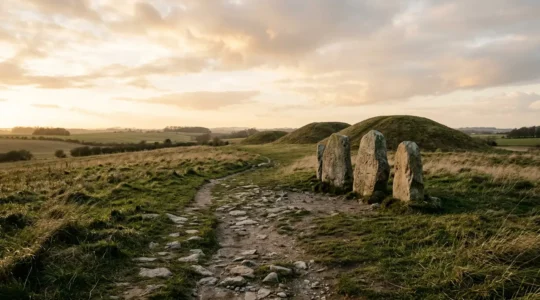
Viking Myths vs. Reality: What Will You Actually Find in Denmark?
The popular image of Vikings is largely a 19th-century invention; the historical reality found in Denmark, revealed by the archaeological record, is far more fascinating. The Viking Age was a concise historical period (c. 800-1050 AD) that concluded not in…
Read more