Copenhagen Lifestyle
Copenhagen represents more than just a Scandinavian capital—it embodies a distinct philosophy of urban living that seamlessly blends environmental consciousness, social trust, and an almost counterintuitive pursuit of coziness within a modern metropolis. While many cities struggle to balance growth with livability, the Danish capital has cultivated a lifestyle model that prioritizes human wellbeing, ecological responsibility, and genuine community connection. This approach has transformed everyday activities like commuting, socializing, and even staying warm into defining cultural practices.
Understanding Copenhagen’s lifestyle means examining the interconnected systems and cultural values that make it function: from the carbon-neutral ambitions shaping urban planning to the untranslatable concept of hygge that governs social interactions. Whether you’re considering an extended stay or simply seeking to experience the city beyond its tourist attractions, grasping these fundamental elements will unlock a deeper appreciation for how Copenhageners actually live, work, and find contentment in their unique urban environment.
Why Sustainability Defines Daily Existence
In Copenhagen, environmental consciousness isn’t a weekend hobby or marketing buzzword—it’s woven into the infrastructure itself. The city’s ambitious carbon-neutral targets have fundamentally reshaped how residents move through space, where they choose to live, and how they think about their environmental footprint. This isn’t driven by guilt or sacrifice, but by a pragmatic recognition that sustainable choices often align with better quality of life.
Green mobility options dominate the transportation landscape. The cycling infrastructure—complete with dedicated bridges, traffic lights synchronized for bicycle speed, and sheltered bike parking at train stations—makes car ownership feel impractical rather than aspirational. Public transit integrates seamlessly with bicycle routes, while harbor buses transform commuting into a scenic experience along clean urban waterways. Even architectural landmarks double as functional sustainable infrastructure: the CopenHill power plant features a ski slope on its roof, turning waste-to-energy facilities into recreational destinations.
Sustainable districts showcase innovative approaches to communal living, featuring shared green spaces, district heating systems, and buildings designed for maximum energy efficiency without sacrificing aesthetic appeal. Residents in these neighborhoods often report that the environmental benefits—like reduced energy costs and access to nature—are secondary to the improved social cohesion these design choices encourage. When selecting accommodation, travelers and temporary residents discover that genuine eco-certifications signal not just environmental standards but often superior construction quality and thoughtful design.
Green Architecture as Lived Experience
Futuristic green solutions aren’t confined to glossy architecture magazines—they’re part of the everyday landscape. Buildings incorporate living walls, rainwater collection systems, and solar panels as standard features rather than premium additions. The man-made island structures demonstrate how urban expansion can prioritize ecological integration from inception, creating neighborhoods where nature and density coexist. This architectural philosophy extends to public spaces, where parks, ramparts, and waterfront areas provide quiet spots that feel deliberately preserved rather than accidentally leftover.
The Danish Art of Hygge and Meaningful Connection
Attempting to translate hygge inevitably falls short, which is precisely why understanding it requires observation rather than definition. At its core, hygge represents an intentional cultivation of warmth, intimacy, and contentment—often in defiance of Denmark’s long, dark winters. But reducing it to candles and cozy blankets misses the crucial social component that makes it distinctly Danish.
Practicing hygge means creating environments where people feel genuinely comfortable being themselves. The hyggeliest cafes aren’t necessarily the most Instagram-worthy; they’re spaces with soft lighting, comfortable seating arrangements that encourage conversation, and an unrushed atmosphere where lingering over a single coffee for hours is perfectly acceptable. These establishments avoid commercial traps by focusing on authenticity—mismatched vintage furniture feels more hyggeligt than perfectly coordinated designer pieces.
To experience hygge correctly requires understanding its temporal dimension. It thrives in moments deliberately carved out from productivity: afternoon coffee breaks, Friday evening gatherings, or Sunday brunches that stretch into early afternoon. Copenhageners prioritize this leisure time not as reward for work completed, but as essential to wellbeing. The practice extends beyond private homes into public life—notice how strangers share picnic tables in parks or how harbor swimming creates spontaneous communities of regular participants.
The Social Infrastructure of Coziness
What makes Copenhagen’s version of hygge particularly intriguing is how it’s supported by broader social systems. The high levels of institutional trust mean people feel secure enough to relax deeply. Communal living arrangements and shared public spaces create natural opportunities for the kind of casual, repeated interactions that build genuine connection. Even the city’s design for children—with unsupervised playgrounds and car-free school routes—reflects a collective commitment to creating environments where people can let their guard down.
Embracing Alternative Culture and Urban Adventure
Copenhagen’s alternative and nautical atmosphere provides a counterbalance to its reputation for sleek Scandinavian design. The canals and waterways aren’t mere scenic backdrops—they’re active transportation routes where renting boats and navigating independently offers a completely different perspective on the city’s geography. This maritime heritage persists in contemporary life, from the boat rental culture to the social protocols around dock usage.
The Freetown of Christiania represents the city’s most visible alternative community, a self-governing neighborhood that has maintained its countercultural identity for decades. Respecting the rules of this unique enclave—particularly around photography and conduct—is essential for visitors. Beyond the controversy, Christiania demonstrates Copenhagen’s unusual tolerance for social experimentation and its willingness to preserve spaces that operate outside conventional urban planning.
Urban adventures here take unexpected forms. Climbing the iconic spiral tower of Vor Frelsers Kirke offers panoramic views earned through vertigo-inducing effort. Swimming in clean urban waters—whether in designated harbor baths or off public docks—transforms summer socializing. The very fact that you can safely swim in a capital city’s central harbor speaks volumes about water quality standards and environmental priorities. These activities aren’t manufactured tourist experiences but authentic aspects of how residents use their city.
The Bicycle as Cultural Statement
Calling Copenhagen a “bike-friendly city” dramatically understates the situation. Here, commuting by bike represents the default choice across all demographics—business executives in suits, parents with cargo bikes carrying multiple children, elderly residents running errands. The bicycle isn’t a recreational vehicle or environmental statement; it’s simply the most practical tool for urban mobility.
This cycling culture rests on infrastructure that treats bicycles as legitimate traffic rather than recreational afterthought. Dedicated cycle lanes run throughout the city, often physically separated from both cars and pedestrians. Traffic lights give cyclists advanced green signals. Bike parking facilities at transit stations accommodate thousands of bicycles in multi-story structures. Architectural landmarks themselves feature cycling routes—you can literally cycle on elevated platforms that double as urban design installations.
The social dimensions of cycling culture deserve attention. Cyclists observe unspoken etiquette: maintaining consistent speed, signaling intentions clearly, respecting the passing lane. There’s a certain democratic quality to bike traffic—everyone moves at roughly human-powered speeds, removing the status signaling that car brands provide. Winter cycling, far from being extreme behavior, continues with appropriate tires and clothing, demonstrating how cultural norms can override weather-based excuses.
Living Like a Temporary Resident
Experiencing Copenhagen as temporary residents rather than tourists requires engaging with mundane systems that reveal cultural values. Grocery shopping locally means navigating excellent but compact supermarkets where organic options dominate shelf space and bulk packaging is deliberately limited to discourage overconsumption. The checkout process moves efficiently because customers bag their own purchases and card payment is universal.
Sorting waste correctly becomes a surprisingly complex task, with multiple categories beyond basic recycling. Buildings provide dedicated waste rooms with clearly labeled bins for paper, cardboard, glass (sorted by color), plastic, metal, food waste, and residual waste. This system works because of collective compliance—social pressure and genuine environmental concern combine to ensure participation. The occasional confusion newcomers experience with these systems reveals assumptions about convenience versus environmental responsibility.
Neighborhood apps and local digital platforms facilitate everything from finding workspace to navigating laundry facilities in apartment buildings. Many residential buildings feature shared laundry rooms with booking systems, reflecting both practical space constraints and a comfort with communal resources. Understanding these micro-systems—when to book laundry time, how to access shared bike storage, which apps locals actually use—marks the transition from visitor to temporary participant in daily life.
The Practical Rhythms of Copenhagen Life
Daily rhythms follow patterns shaped by Denmark’s latitude and cultural priorities. Work-life boundaries are respected with an intensity that surprises many internationals—leaving the office at reasonable hours isn’t slacking but expected. This creates a city that’s vibrantly active in early evenings rather than late nights. Shopping hours reflect this too, with many stores closing by early evening on weekdays and even earlier on Sundays, when most retail remains closed entirely. These constraints force a different relationship with consumption and time management.
The Infrastructure Behind Happiness
Copenhagen consistently ranks among the world’s happiest cities, but this contentment rests on deliberate systemic choices rather than fortunate accident. Analyzing the infrastructure of happiness reveals interconnected policies and cultural norms that create conditions for wellbeing. Trusting the system—from government institutions to fellow citizens—reduces the constant vigilance and anxiety that characterizes life in lower-trust societies.
Communal living arrangements extend beyond shared laundry rooms to encompass co-housing projects, shared courtyards, and public spaces designed to encourage interaction. These environments support social connection without requiring extroversion—you can participate at your comfort level while still benefiting from community proximity. The design for children throughout the city reflects a collective investment in the next generation: generous parental leave policies, heavily subsidized childcare, playgrounds in virtually every neighborhood, and urban planning that assumes children will navigate public space semi-independently.
Perhaps most significantly, the city’s infrastructure prioritizes what economists call “time affluence”—the feeling of having enough time. Short commutes via bicycle, efficient public services, and cultural expectations around work hours combine to give residents more discretionary time than car-dependent, longer-commuting counterparts elsewhere. This time becomes available for the social connection, physical activity, and cultural engagement that directly contribute to life satisfaction.
Understanding Copenhagen’s lifestyle ultimately reveals a coherent philosophy: that quality of life emerges from aligned systems, shared values, and infrastructure designed around human needs rather than economic efficiency alone. Whether you’re visiting for weeks or simply seeking inspiration for your own city, the Danish capital demonstrates that urban living can nurture both individual contentment and collective flourishing when the underlying structures support such goals.
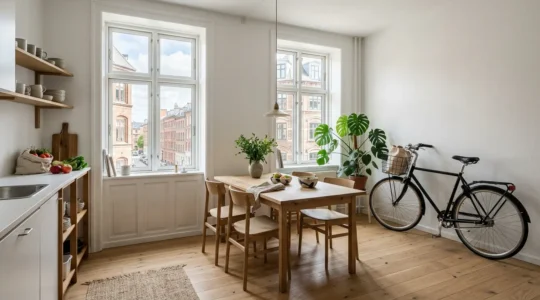
How to Rent an Apartment and Truly Live Like a Copenhagener for a Month
In summary: To live like a Copenhagener, focus on mastering the city’s practical daily systems, not just cultural concepts like hygge. Authentic living starts with choosing the right neighborhood and an apartment over a hotel to integrate into the local…
Read more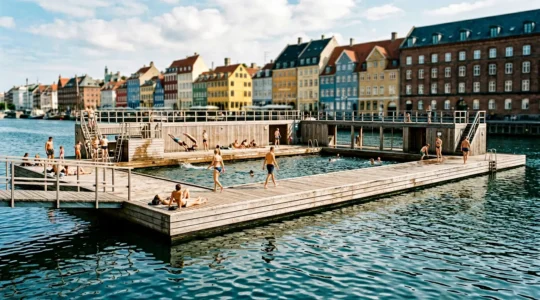
Islands Brygge or Sandkaj: Which Harbor Bath Has the Best Vibe?
Choosing between Islands Brygge and Sandkaj is about more than swimming; it’s about picking your social scene for the day. Islands Brygge is the classic, high-energy choice with lifeguards and dedicated family pools, perfect for people-watching. Sandkaj offers a modern,…
Read more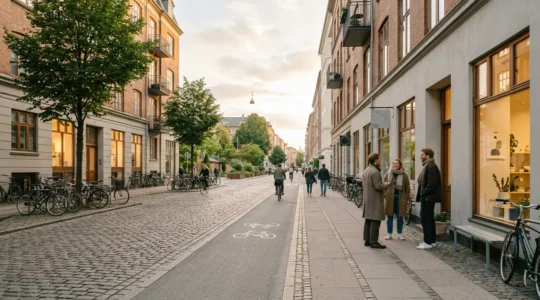
How Does Urban Design Influence the ‘Danish Art of Living’?
Danish happiness is not a cultural mystery; it’s an engineered outcome of a city designed as an ‘infrastructure of happiness’. Urban planning choices in Copenhagen intentionally create social trust, efficiency, and community as the default experience. Physical structures, from bike…
Read more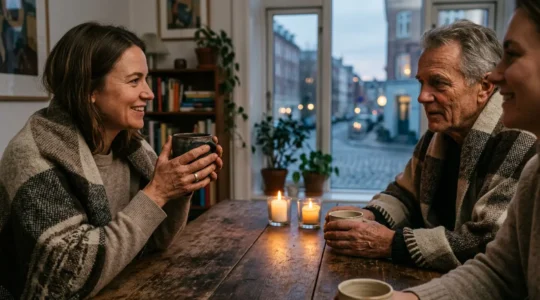
How to Experience Genuine Hygge and Not Just Buy More Candles
Contrary to commercial hype, true hygge isn’t about buying more candles or blankets. It’s a Danish social ritual you actively create with others through intentional presence and shared experiences. This guide dismantles the clichés and shows you how to find…
Read more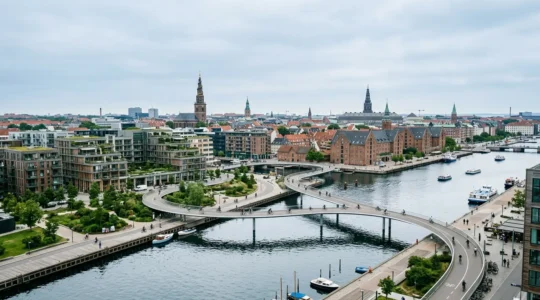
Copenhagen’s Green Future: A Blueprint for Tomorrow’s Cities
Copenhagen’s status as a green capital isn’t magic; it’s a result of deliberate, complex, and sometimes contradictory engineering and policy decisions. Iconic projects like CopenHill reveal a fundamental tension between ambitious green goals and pragmatic operational needs, such as importing…
Read more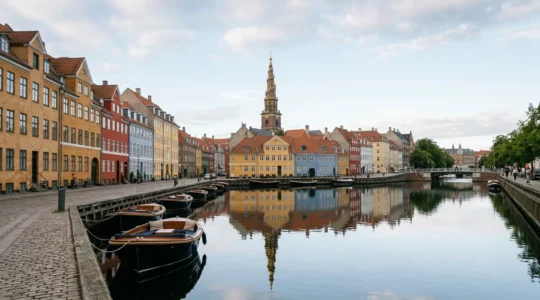
How to Spend a Day in Christianshavn Beyond Just Freetown Christiania?
Most visitors come to Christianshavn for Freetown Christiania and miss the neighborhood’s true essence. The real magic isn’t found in one single place, but in embracing the area’s laid-back, nautical rhythm. This guide shows you how to experience Christianshavn like…
Read more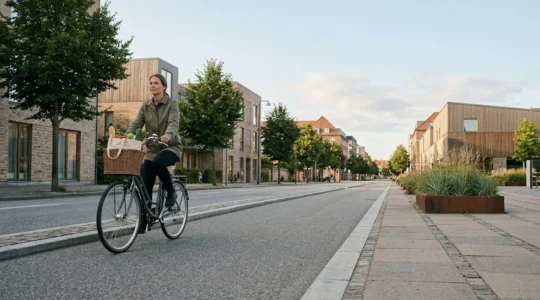
How to Plan a Zero-Waste Trip to Copenhagen Without Sacrificing Comfort?
Sustainable travel in Copenhagen isn’t about giving things up; it’s about upgrading your experience by tapping into the city’s world-class green systems. Choose your accommodation and transport wisely by decoding eco-labels and transport passes like a local. Master the simple…
Read more