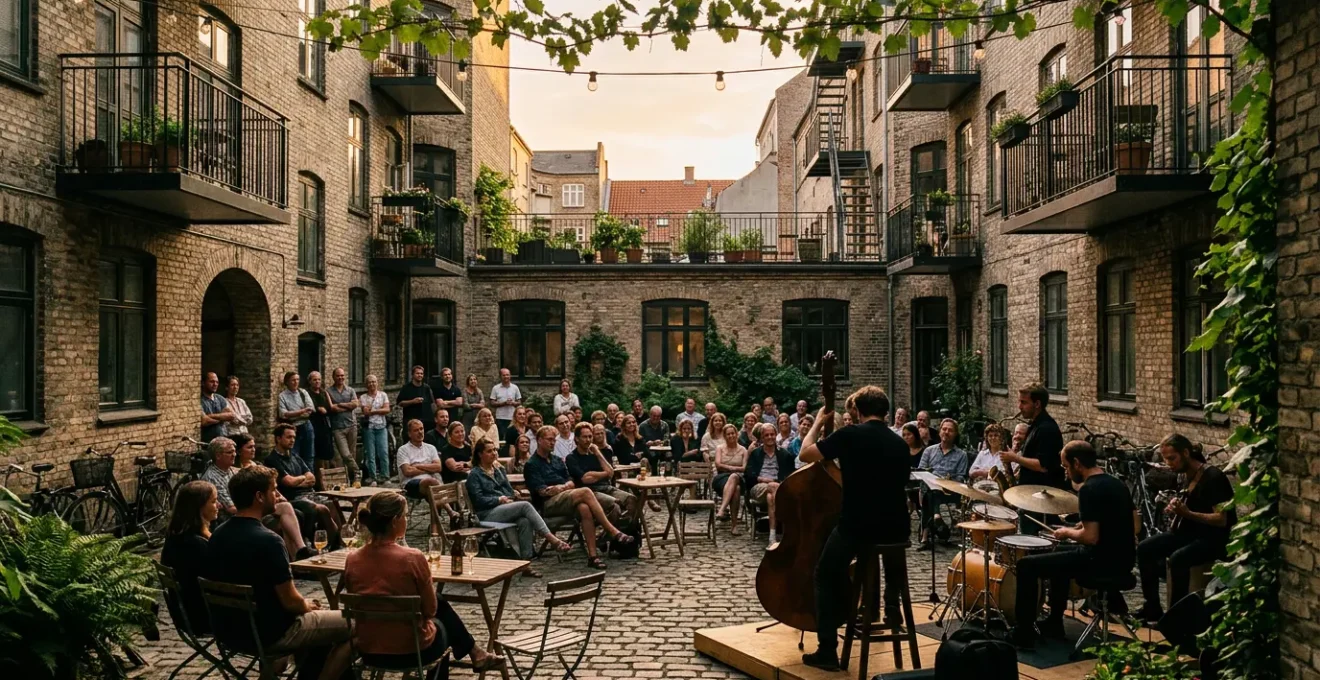
The secret to the free Copenhagen Jazz Festival isn’t a map of venues; it’s a timetable of vibes.
- Afternoons are for sprawling, sun-soaked park concerts.
- Golden hour is for intimate, magical courtyard gigs.
- Late nights are for raw, improvisational jam sessions in hidden clubs.
Recommendation: Sync your day to this natural rhythm to experience the festival’s true soul for free.
The first week of July hits Copenhagen with a unique energy. The air gets thick with long summer nights, the scent of street food, and the unmistakable sound of a thousand different melodies weaving through the city. This is the Copenhagen Jazz Festival, an event so massive—with over 1,200 concerts—that it can feel both exhilarating and completely overwhelming, especially for music lovers trying to catch the vibe without breaking the bank.
The standard advice you’ll hear is predictable: check the official program, head to the big parks like Kongens Have, and maybe bring your own drinks. While solid, that’s just scratching the surface. It’s the tourist’s approach, a checklist that misses the festival’s living, breathing pulse. It treats the event like a collection of static points on a map rather than the dynamic, city-wide improvisation that it truly is.
But what if the real secret wasn’t about *where* to go, but *when*? The key to unlocking the festival’s best free experiences lies in understanding its natural flow, a concept I call the city’s “Jazz Rhythm.” This is a daily progression of energy and atmosphere that shifts with the sun. It moves from the bright, open-air stages of the afternoon to the intimate, almost secret concerts in hidden courtyards during the golden hour, before finally settling into the raw, smoky energy of late-night jam sessions where the pros play for passion, not a paycheck. This guide isn’t a map; it’s a score. It will teach you how to listen to the city’s tempo and find your place in the groove, experiencing the festival’s authentic heart for free.
To help you navigate this sprawling celebration of sound, we’ve broken down the essential elements for experiencing the festival like a true Copenhagen insider. From choosing the right venue for your mood to finding the secret late-night sessions, this guide provides the rhythm you need to follow.
Summary: Copenhagen Jazz Festival: A Guide to the City’s Rhythmic Heart
- Smoke-Filled Clubs or Open Parks: Which Jazz Venue Fits Your Mood?
- When Do Tickets Go on Sale for the Royal Theater Jazz Concerts?
- Vinterjazz: Is the Cold Weather Version Worth the Trip in February?
- Are There Jazz Concerts Suitable for Children During the Festival?
- Where to Find After-Hours Jam Sessions Where Pros Play for Fun?
- How to Enjoy Street Festivals Without Spending a Fortune on Drinks?
- When is Copenhagen Art Week and Should You Plan Your Trip Around It?
- How to Join Copenhagen’s Street Parties Like a Local?
Smoke-Filled Clubs or Open Parks: Which Jazz Venue Fits Your Mood?
The first step to syncing with the festival’s rhythm is knowing your options. The beauty of the Copenhagen Jazz Festival is its sheer diversity of stages; it’s not a one-size-fits-all event. You can curate your day based entirely on the atmosphere you’re seeking, from a lazy afternoon picnic to an intense, late-night musical pilgrimage. Think of the city as a menu of moods, each with its own time, place, and energy. The key is understanding how this menu changes throughout the day.
A typical day during the festival follows a beautiful, unwritten schedule dictated by the sun and the city’s vibe. It begins with family-friendly sets in the parks, transitions to something more intimate as the sun sets, and culminates in the raw energy of the clubs. This temporal and spatial progression is the festival’s true heartbeat. For instance, the afternoon might be spent lounging in Kongens Have, but as the “Golden Hour Shift” begins around 6 PM, the energy moves into the city’s hidden courtyards, offering a magical blend of open-air freedom and club-like acoustics. Later, the night belongs to legendary venues where the music continues until dawn.
This table breaks down the essential venue types, helping you match the right space and time to your desired festival experience. It’s your cheat sheet for navigating the festival’s daily flow.
| Venue Type | Atmosphere | Typical Time | Capacity | Best For | Cost |
|---|---|---|---|---|---|
| Open Parks (Kongens Have, Ørstedsparken) | Family-Friendly, Relaxed | Afternoon (15:00-19:00) | 500-2000 | Families, casual listeners, picnics | Free |
| Hidden Courtyards (Gård) | Intimate, Semi-Private | Golden Hour (18:00-21:00) | 50-150 | Romantic dates, local vibe seekers | Free |
| Jazz Clubs (Montmartre, La Fontaine) | Intimate, Professional | Night (20:00-03:00) | 85-200 | Jazz aficionados, late-night explorers | Ticketed (150-400 DKK) |
| Concert Halls (Royal Theatre, Koncerthuset) | Prestigious, Formal | Evening (19:00-22:00) | 400-1800 | Headline acts, audiophiles | Ticketed (300-800 DKK) |
| Harbor Front Stages | High-Energy, Social | Late Afternoon (17:00-22:00) | 1000-5000 | Social groups, festival atmosphere | Free |
Understanding this progression is everything. It allows you to ride the wave of energy across the city, catching three or four completely different—and often free—concert experiences in a single day, simply by knowing where the rhythm is headed next.
When Do Tickets Go on Sale for the Royal Theater Jazz Concerts?
While this guide is your ticket to the free side of the festival, knowing the alternative—the high-cost, high-stress world of ticketed events—only sweetens the deal. The headline acts at prestigious venues like The Royal Theatre are phenomenal, but they represent a completely different festival experience. It’s a world of calendar alerts, frantic online queues, and steep prices. Tickets for these major shows typically go on sale in early April, right after the full program is announced, and they sell out fast. It’s a game of speed and strategy.
But here’s the beautiful truth: you don’t need to play that game. The soul of the festival doesn’t live exclusively on those grand stages. In fact, it’s a point of pride for the organizers that most of the 1,100+ concerts are free of admission. This isn’t an accident; it’s the core philosophy of the event. The city itself is the main stage, and the best seats are often a patch of grass in a park or a cobblestone step in a hidden courtyard. By choosing the free path, you’re not getting a lesser experience; you’re opting into the spontaneous, democratic spirit that makes the festival so unique.
For those who might still be tempted by a specific headliner, there is a strategy involving app notifications for last-minute releases and even showing up at the box office before a show. However, focusing your energy on the festival’s free offerings is a more rewarding approach. It replaces the anxiety of ticket-hunting with the joy of discovery, allowing you to stumble upon your new favorite band in a sun-drenched square, completely by chance.
So, let others worry about checkout timers and sold-out signs. Your currency is curiosity, and your schedule is dictated by the music you can hear drifting down the street.
Vinterjazz: Is the Cold Weather Version Worth the Trip in February?
If the sprawling, sun-soaked energy of the summer festival is a vibrant big band number, then Vinterjazz is a smoky, introspective piano trio. Held over 30 days in the deep chill of February, it’s a completely different beast, trading outdoor stages for the warm, cozy intimacy of indoor venues. It’s less a city-wide party and more a nationwide celebration of *hygge* and sound, with over 600 concerts happening in clubs, theaters, museums, and even libraries across Denmark.
The atmosphere shifts from bustling and festive to intimate and focused. The crowds are smaller, the artists are often Nordic-focused, and the entire experience encourages you to lean in and listen closely. It’s a festival for the dedicated jazz aficionado who prefers thoughtful composition over spontaneous street parties. As the organizers themselves put it, Vinterjazz is designed to nurture the year-round ecosystem of jazz in Denmark.
Vinterjazz is first and foremost a club festival that kick-starts the season for the many Danish jazz clubs that create an environment where jazz can develop and live year round.
– Copenhagen Jazz Festival Fonden, Official Vinterjazz Festival Description
This focus on indoor, club-based performances creates a deeply atmospheric experience, as the warm glow of a stage contrasts with the cold twilight outside.
So, is it worth the trip? If your dream is to wander from sunny park to bustling square, then stick to the summer festival. But if the idea of discovering emerging Danish talent in a candle-lit cafe while snow falls outside sounds like heaven, Vinterjazz offers a unique and deeply rewarding musical pilgrimage. The following table highlights the key differences in tempo and tone between the two festivals.
| Metric | Copenhagen Jazz Festival (Summer) | Vinterjazz (Winter) |
|---|---|---|
| Dates | July 4-13 (10 days) | January 30 – February 28 (30 days) |
| Number of Concerts | 1,200 concerts | 600+ concerts |
| Number of Venues | 120 venues (Copenhagen-focused) | 150+ venues (nationwide Denmark) |
| Venue Types | Outdoor stages, parks, courtyards, clubs, halls | Indoor clubs, theaters, museums, cafes, libraries |
| Attendance | 250,000+ guests | Smaller, intimate crowds |
| Artist Focus | International headliners + Danish artists | Nordic focus + emerging Danish talent |
| Atmosphere | Festive, bustling, outdoor-centric | Cozy, hygge-focused, introspective |
| Overall Cost | Moderate (many free outdoor concerts) | Lower (more club-based, accessible pricing) |
| Spontaneity Factor | High (stumble upon street concerts) | Moderate (requires planning) |
| Weather | Warm, long daylight (15-20°C) | Cold, short days (0-5°C) |
Ultimately, both festivals showcase the incredible depth of Denmark’s jazz scene, just played in a different key.
Are There Jazz Concerts Suitable for Children During the Festival?
Absolutely. The Copenhagen Jazz Festival isn’t just for seasoned aficionados in smoky clubs; it’s a profoundly intergenerational event. A core part of the festival’s philosophy is making jazz accessible to everyone, and that absolutely includes the youngest listeners. In fact, a whole theme of the festival is dedicated to it: Børnejazz, or “Children’s Jazz.” These aren’t just regular concerts that kids are allowed into; they are performances specifically designed to be interactive, engaging, and perfectly timed for young families.
These daytime concerts, typically held between 10:00 and 13:00 in spacious, stroller-accessible parks like Lindevangsparken and Ørstedsparken, are a huge part of the festival’s daytime rhythm. The music is upbeat and the atmosphere is relaxed, allowing kids to move around and experience the joy of live music without the strict etiquette of a concert hall. This commitment to inclusivity is reflected in the festival’s demographics; visitors are divided evenly among age groups: 0-35 years, 36-55 years, and 56+ years. It’s a true cross-section of society, all gathered to share in the music.
For parents, navigating the festival with children in tow just requires a bit of planning. The key is to lean into the daytime park venues, pack smart, and know how to find the right events. The official program is your best friend here—a quick search for “Børnejazz” or filtering by the “Jazz for Kids” theme will reveal a full schedule of family-friendly options. It’s about setting your family up for success, ensuring the experience is a joyous introduction to jazz, not a stressful outing.
By making jazz a fun, daytime adventure, the festival ensures that the next generation of music lovers is already in the audience.
Where to Find After-Hours Jam Sessions Where Pros Play for Fun?
Here’s the score for the true night owls, the seekers of authentic, uncut jazz: the festival doesn’t end when the last official concert does. In fact, for many musicians, that’s when the *real* music begins. After-hours jam sessions are the festival’s legendary encore, where artists—from local heroes to international headliners—gather in historic clubs to play for the sheer joy of it. These sessions are raw, spontaneous, and utterly magical. They are not advertised, they have no setlists, and they are the absolute pinnacle of the festival’s “Jazz Rhythm.”
Finding them is an art. The strategy is to follow the musicians. When the main gigs wrap up around 11 PM, a migration begins. Musicians and in-the-know fans head towards a small cluster of iconic bars in the city center. This area, which can be dubbed the “Jam Session Triangle,” is anchored by La Fontaine, Copenhagen’s oldest jazz bar, and includes nearby spots like Charlie Scott’s and the area around Jazzhus Montmartre. As jazz pianist Lan Doky notes, “Everyone who plays in Copenhagen ends up there at some point.” The energy is electric as musicians take turns improvising, challenging each other, and creating one-of-a-kind musical moments that will never be repeated.
However, entering this sacred space requires respecting its unwritten rules. This isn’t a typical concert; it’s a conversation between musicians that you’ve been invited to witness. Knowing the proper etiquette is key to being a welcome guest rather than an intrusive tourist. It’s about supporting the venue, respecting the music, and understanding the flow of the session.
Your Checklist for Jam Session Etiquette
- Support the Venue: Entry is free, so buy drinks. The bar’s sales are what keep these sessions alive.
- Respect the Music: Stay silent during performances, especially solos. Save conversations for the breaks between songs.
- Applaud Solos: Acknowledge each musician’s contribution by applauding after their individual solo, not just at the song’s end.
- Arrive Early for Seats: These spots are small and popular. Arrive within 30 minutes of the jam’s start time (around 22:30-23:00) to get a seat.
- Practice Good Exits: If you need to leave, do so between songs to avoid disrupting the performance.
- Be Camera-Shy: Avoid using flash. Many musicians prefer these experimental moments to remain undocumented, so always be discreet.
This is where you’ll find the soul of Copenhagen jazz—unfiltered, unpredictable, and unforgettable.
How to Enjoy Street Festivals Without Spending a Fortune on Drinks?
Part of embracing the free-flowing spirit of the Copenhagen Jazz Festival is adopting the local customs, and none is more essential than the art of budget-friendly hydration. At the large, free outdoor concerts in parks and squares, you’ll quickly notice that almost no one is buying expensive festival-priced drinks. Instead, the air is filled with the satisfying ‘pop’ of bottle caps and the clinking of glasses brought from home. This is a core element of Danish *hygge* and public life: you bring your own. It’s not just accepted; it’s expected.
The local’s toolkit is simple but effective. Before heading to a concert, you make a strategic stop at a discount supermarket like Netto, Fakta, or Føtex. These are conveniently located near major hubs like Nørreport Station (for Kongens Have) and Vesterbro. Here, you stock up on local beers, a bottle of wine, and maybe some snacks. A crucial piece of gear is a bottle opener—don’t expect to find one provided. This pre-purchase strategy is the single biggest money-saver for anyone wanting to soak in hours of music.
This scene of communal picnicking is a hallmark of the summer festival, creating a wonderfully relaxed and egalitarian atmosphere.
Beyond just saving money, participating in this ritual is a way to connect with the local culture. You can even engage with Denmark’s efficient recycling system, the ‘pantsystem,’ by collecting your empty bottles and cans for a small refund at any supermarket. And here’s a pro tip for social currency: bring an extra beer or two to share. Offering a drink to your neighbors on a crowded blanket is the quickest way to make new friends and become part of the collective vibe. It transforms you from a passive spectator into an active participant in the city’s giant, jazzy picnic.
It’s about more than just saving a few kroner; it’s about tuning into the communal, laid-back frequency of a Copenhagen summer.
When is Copenhagen Art Week and Should You Plan Your Trip Around It?
For the culturally voracious traveler, the idea of “stacking” major events is tempting. Could you combine the sonic immersion of the Jazz Festival with the visual feast of Copenhagen Art Week? The short answer is: not directly. The timing creates a rhythm clash. Copenhagen Art Week typically takes place in late August or early September, while the summer Jazz Festival dominates the first half of July. They are two distinct high notes in the city’s cultural calendar, not a harmonious chord played at the same time.
However, this doesn’t mean you have to choose between ear and eye. A strategic traveler can still experience both. The most obvious approach is a dual-visit plan, but for those on a single trip, the key is to look for the crossover. Many of Copenhagen’s premier cultural institutions play a role in both worlds. Venues like Charlottenborg Kunsthal, the Royal Danish Theatre complex, and various galleries in the Meatpacking District (Kødbyen) often host jazz concerts during the festival while maintaining their art exhibitions. You can spend an afternoon admiring Danish design and an evening in the same courtyard listening to a saxophone solo.
Ultimately, trying to perfectly align both is a fool’s errand. The Copenhagen Jazz Festival is a behemoth of an event that demands your full attention. The sheer scale, with 10 days, 120 venues, and 1,200 concerts, as confirmed by festival organizers, creates a self-contained universe of music. Trying to squeeze in another major city-wide festival would be like trying to listen to two different albums at once. The better strategy is to embrace the July rhythm fully and pepper your jazz-filled days with visits to Copenhagen’s world-class permanent collections at museums like the Louisiana, SMK, and the Glyptotek, which are spectacular year-round.
Let the Jazz Festival be your main theme, and let the city’s incredible art scene provide the beautiful, contrapuntal melody.
Key Takeaways
- The festival’s energy has a natural daily rhythm: parks (afternoon), courtyards (evening), and jam sessions (late-night).
- Most of the 1,200+ concerts are free; focus on them instead of chasing expensive tickets.
- Embrace local culture: bring your own drinks to parks and learn the unspoken rules of jam sessions.
How to Join Copenhagen’s Street Parties Like a Local?
As the official free concerts wind down around 10 or 11 PM, a new, more spontaneous rhythm emerges. This is the “Concert-to-Party Pipeline,” where the energy of an organized gig naturally spills out into the surrounding streets, evolving into informal, decentralized parties. This is especially true in the vibrant neighborhoods of Nørrebro (around Sankt Hans Torv) and Vesterbro (along Sønder Boulevard). These aren’t planned events you find on a program; they are organic gatherings you find by following the sound and the crowd.
Joining in is all about reading the social cues. A public street party feels open and welcoming, with small, dispersed groups and music from portable speakers. It’s a stark contrast to a private gathering, which will feel like a closed circle. The Danish social code values relaxed togetherness (*hygge*) over loud intrusion. The easiest way to bridge the gap is with a simple “skål!” (cheers) and an offer to share a drink. This small act is the ultimate social currency, an instant signal that you’re there to share the vibe, not just observe it.
Behaving like a local means respecting the unwritten rules. This includes bringing your own supplies, keeping your volume in check to respect residents, and, most importantly, cleaning up after yourself. Copenhageners take immense pride in their clean city, and leaving litter behind is the fastest way to mark yourself as a clueless tourist. The goal is to blend in seamlessly, becoming part of the temporary community that forms on a street corner for a few magical hours. It’s a final, beautiful improvisation in a day full of music.
Copenhagen Jazz Festival takes a pride in reaching many – and new – audiences… Visitors can look forward to Copenhagen as a friendly and creative city where it’s safe to wander around accompanied by jazz night and day.
– Copenhagen Jazz Festival Official Press, About Copenhagen Jazz Festival
Now you have the rhythm. Stop being a tourist with a map and start moving with the music. Grab your tote bag, check the sun’s position, and let the sounds of Copenhagen guide you to the heart of the festival.