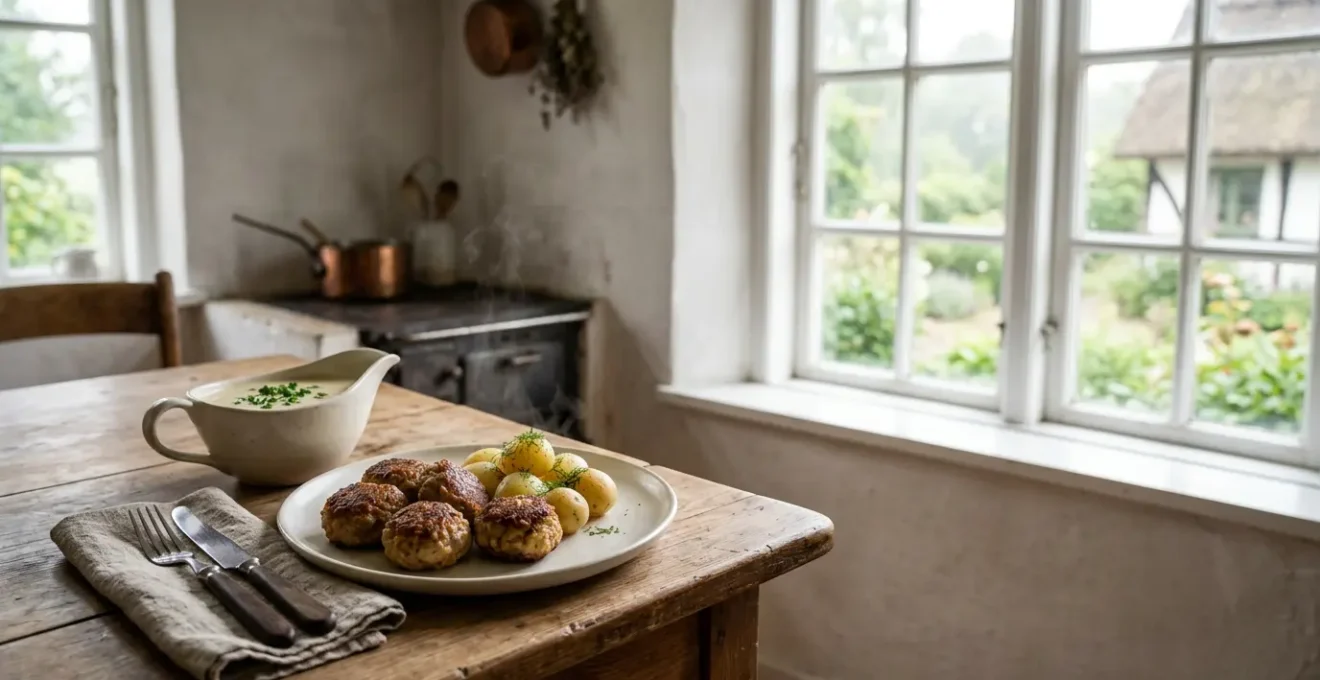
The heart of Danish cuisine isn’t in its famed New Nordic restaurants, but in the robust, comforting classics that define ‘hygge’ on a plate.
- National dishes like stegt flæsk are chosen by the people and rooted in the country’s agricultural history, not fleeting trends.
- The traditional order of eating and the crucial balance of rich meats with sour sides are essential rituals for an authentic experience.
Recommendation: Seek out a traditional ‘kro’ (inn) or a classic lunch restaurant to taste these dishes in their most honest and soul-warming form.
When foodies dream of Denmark, their minds often drift to the cerebral, multi-course tasting menus of New Nordic giants or the picturesque, artfully arranged open-faced sandwiches known as smørrebrød. These are, without question, vital parts of the Danish culinary landscape. Yet, they represent only a fraction of the story. To truly understand the Danish culinary soul, you must look past the tweezers and foam, beyond the lunchtime rye bread, and into the heart of the Danish home kitchen. This is where the real magic happens, where history is served on a plate, and where comfort is the main ingredient.
The quest for authentic Danish food is not about chasing Michelin stars; it’s about finding the dishes that have warmed generations of Danes through long, dark winters. It’s about understanding why a simple plate of fried pork can unite a nation, or how a seven-hour lunch is a cherished tradition, not a test of endurance. This is a journey to find food that adheres to the “grandmother’s standard”—dishes defined by nostalgia, honesty, and a profound sense of place. We’ll explore the why on the plate, uncovering the cultural roots of these hearty dinner classics that are, in essence, hygge on a fork.
This guide will take you through the essential, non-negotiable experiences of traditional Danish dining. We will explore the national dish, the unique institution of the country inn, the great Christmas dinner debate, and the unwritten rules that govern a proper Danish meal, ensuring you can eat with the confidence and appreciation of a local.
Summary: A Critic’s Guide to Denmark’s Hearty Dinner Classics
- Stegt Flæsk: Why Is Fried Pork with Parsley Sauce the National Dish?
- What Is a ‘Kro’ and Why Should You Stop at One for Dinner?
- Duck or Pork Roast: What Is the Debate for Christmas Dinner?
- Sol over Gudhjem: Why Must You Try Smoked Herring on Bornholm?
- Red Cabbage and Pickles: Why Are Sour Sides Essential to Danish Meat?
- Aamanns or Schønnemann: Which Restaurant Serves the Best Modern Smørrebrød?
- Snaps and Herring: How to Survive a 7-Hour Easter Lunch?
- How to Eat Smørrebrød in the Correct Order to Avoid a Faux Pas?
Stegt Flæsk: Why Is Fried Pork with Parsley Sauce the National Dish?
Stegt flæsk med persillesovs—crispy fried pork belly with parsley sauce and boiled potatoes—is more than just a meal; it is a declaration of Danish identity. While other nations have dishes designated by historical decree, Denmark’s national dish was chosen by its people. In a 2014 vote organized by the then-Minister for Food, this humble, hearty classic was the undeniable winner, securing an overwhelming 44% of the nearly 63,000 votes cast. This wasn’t a contest of culinary finesse, but of cultural resonance.
The dish’s supremacy speaks to Denmark’s deep agricultural roots and its history as a leading pork producer. For centuries, pork was a staple, and this preparation—salty, fatty, crispy pork belly—is its most straightforward and arguably most satisfying expression. The genius lies in its pairing: a creamy, béchamel-style sauce loaded with fresh, bright parsley and simple boiled potatoes. The sauce and potatoes cut through the richness of the pork, creating a perfectly balanced plate that is both deeply comforting and utterly delicious. It’s a taste of the old Danish countryside, a meal that feels both honest and celebratory.
The vote itself was about more than just food, it was a moment of national reflection. As the Food Minister at the time, Dan Jørgensen, noted, it sparked a vital conversation about Danish heritage. He observed:
The declaration of Denmark’s national dish initiated a debate on Danish produce and our culinary roots. Danish and New Nordic Cuisine have become known the world over. But here at home in our own kitchens, we often forget our culinary roots.
– Dan Jørgensen, Denmark’s Minister for Food, Agriculture and Fisheries in 2014
To eat stegt flæsk is to participate in this legacy. It is a rejection of the complex in favor of the profound, a dish that proves that the heart of a nation’s cuisine often beats strongest in its simplest recipes. Many traditional restaurants offer all-you-can-eat servings, a testament to its beloved status.
What Is a ‘Kro’ and Why Should You Stop at One for Dinner?
A Danish kro is a traditional countryside inn, an institution that is as essential to the Danish landscape as windmills and coastal towns. These are not merely restaurants or hotels; they are bastions of history, often housed in centuries-old, half-timbered buildings with thatched or red-tiled roofs. To stop at a kro for dinner is to step back in time and experience Danish hospitality in its purest form. The atmosphere is thick with hygge, characterized by low-beamed ceilings, intimate dining rooms (known as krostuer), and a commitment to tradition over trends.
The menu at a proper kro is a testament to the “grandmother’s standard.” You won’t find foams, gels, or deconstructions here. Instead, you’ll find the great canon of Danish comfort food, executed with time-honored precision: stegt flæsk, pan-fried plaice with parsley sauce, hearty meat stews (mørbradgryde), and towering plates of smørrebrød. The focus is on generous portions, familiar flavors, and long, unhurried meals where conversation flows as freely as the beer.
This image perfectly captures the timeless, inviting spirit of these historic establishments. Stopping at a kro provides a window into the culinary soul of Denmark that you simply cannot find in the city. It’s a chance to taste dishes as they have been made for generations, in a setting that has welcomed travelers for centuries.
Case Study: The Svostrup Kro Experience
A prime example is Svostrup Kro, an 18th-century historic inn located by the Gudenå River. With its classic half-timbered architecture, period furniture, and cozy dining rooms, it embodies the authentic kro experience. The menu is a celebration of classic Danish recipes, from stegt flæsk to mørbradgryde, all served in their traditional form. Svostrup Kro illustrates that the mission of a great inn is not culinary experimentation, but the preservation of edible history, offering a genuine taste of Danish comfort and familiarity.
Duck or Pork Roast: What Is the Debate for Christmas Dinner?
On Christmas Eve, as families across Denmark gather for their most important meal of the year, a great culinary debate plays out on dinner tables: flæskesteg (pork roast with crackling) or andesteg (roast duck). For an outsider, it might seem like a simple choice, but for Danes, it’s a matter of deep-seated tradition, family history, and regional preference. The pork roast speaks to Denmark’s long agricultural past, a time when nearly every farm raised pigs. The flæskesteg, with its impossibly crispy, salty crackling, is a celebration of this heritage.
The roast duck, on the other hand, tells a story of evolving tastes and continental influence. During the 19th century, serving goose, and later the more manageable duck, became a status symbol in wealthier homes, inspired by German and French yuletide customs. Today, duck is arguably the more common centerpiece. However, the debate is often settled not by choosing one, but by serving both. A 2023 survey for Danish Crown revealed that while 77% of Danes serve duck, a substantial 60% also serve pork roast, and 15% serve three or more kinds of meat. This isn’t indecision; it’s a delicious compromise to honor all branches of family tradition.
The true art of the Danish Christmas plate, however, lies in the accompaniments. Both meats are served with boiled potatoes, caramelized small potatoes (brunede kartofler), a rich gravy, and a generous helping of sweet-and-sour braised red cabbage (rødkål). This combination of savory, sweet, and sour is the hallmark of the Danish holiday palate. So, while the duck versus pork debate continues, the reality is that for many Danes, Christmas wouldn’t be Christmas without a taste of both, surrounded by the essential sides that make the meal complete.
Sol over Gudhjem: Why Must You Try Smoked Herring on Bornholm?
While pork may dominate the mainland, the heart of Danish seafood tradition can be found on the windswept island of Bornholm in the Baltic Sea. Here, the undisputed king is the smoked herring, and its most iconic preparation is a dish named Sol over Gudhjem, or “Sun over Gudhjem.” The name is a tribute to the picturesque fishing port where Danish smoked herring was born. To eat this dish on Bornholm is not just to have lunch; it is to taste a piece of living history.
The dish is a simple, perfect composition: a piece of dark rye bread is topped with a warm, freshly smoked herring, a raw egg yolk (the “sun”), chopped chives, and sharp radishes. The magic is in the quality of the herring itself. Smoked over alder wood in the island’s characteristic white-chimneyed smokehouses, the fish takes on a beautiful golden hue and a delicate, smoky flavor that is worlds away from the heavily preserved herring you might find elsewhere. The creamy yolk, sharp chives, and peppery radish cut through the richness of the fish, creating a perfectly balanced bite.
The sight of smoke curling from the chimneys of a Bornholm smokehouse is a direct link to the island’s identity. This artisanal process, perfected over generations, is what makes the herring so special, infusing it with a flavor that is both subtle and profound.
Case Study: Gudhjem, the Town of 100 Chimneys
The town of Gudhjem is the cradle of this tradition. The island’s first smokehouse opened here in 1866, and at its peak, the town was known as the ‘Town of 100 Chimneys.’ The Sol over Gudhjem dish was named in its honor and has become so emblematic of Danish food culture that it lends its name to Denmark’s most prestigious annual chef competition. Top chefs from across the country gather on Bornholm to create dishes using local ingredients, a testament to how this humble smoked fish has inspired the pinnacle of Danish gastronomy.
Red Cabbage and Pickles: Why Are Sour Sides Essential to Danish Meat?
No traditional Danish dinner featuring rich meats like flæskesteg (pork roast), frikadeller (meatballs), or andesteg (roast duck) is complete without a selection of surt, or sour things. This category of sweet-and-sour pickled sides is not a mere afterthought; it is a fundamental pillar of the Danish palate. The most prominent of these is rødkål, a braised red cabbage that provides the perfect counterpoint to the richness of the main course. As one culinary guide explains, its function is crucial:
The slightly acidic flavor cuts through the fat and cleanses the palate.
– ElevatingKitchen
This principle of balance is the secret to why Danes can enjoy such hearty, fatty meats without feeling overwhelmed. The acidity from the vinegar and the sweetness from the sugar in the rødkål refresh the taste buds between bites, making each mouthful of pork or duck as satisfying as the first. This is the “why” on the plate: a deliberate and brilliant flavor architecture designed for maximum enjoyment of a rich meal.
But rødkål is just the beginning. A proper Danish table will often feature a variety of other pickled vegetables to provide texture and acidic contrast. These essential sides include:
- Asier: Crisp, large pickled gherkins, often served alongside roasts.
- Syltede Rødbeder: Sweet-sour pickled beetroot slices, a classic companion to frikadeller.
- Agurkesalat: A quick-pickled cucumber salad, thinly sliced and dressed with vinegar, salt, and pepper, which maintains a refreshing crunch.
Mastering this balance of savory, fatty, and sour is the key to appreciating Danish comfort food. It’s a culinary philosophy that turns a simple meat-and-potatoes meal into a dynamic and satisfying experience.
Your Checklist for Assembling an Authentic Danish Dinner Plate
- Foundation First: Start with the protein. Is it crispy stegt flæsk, juicy frikadeller, or a slice of flæskesteg with perfect crackling? This is your centerpiece.
- Add the Starch: Place a generous spoonful of boiled potatoes (kartofler) next to the meat. Make sure to leave room for gravy to pool around them.
- Bring in the ‘Surt’: Add a vibrant scoop of sweet-and-sour red cabbage (rødkål) and a few slices of pickled cucumbers (agurkesalat). They should contrast, not cover, the meat.
- The Sauce Connection: Liberally ladle the appropriate sauce over the meat and potatoes—creamy parsley sauce (persillesovs) for stegt flæsk or a rich brown gravy (brun sovs) for roasts.
- Final Garnish Check: Is there a sprig of parsley? A dollop of lingonberry jam? This final touch shows attention to classic detail.
Aamanns or Schønnemann: Which Restaurant Serves the Best Modern Smørrebrød?
While this guide focuses on hearty dinners, no discussion of authentic Danish food is complete without acknowledging smørrebrød. When it comes to the modern evolution of this classic lunch dish, two Copenhagen establishments stand at the forefront: Schønnemann and Aamanns. Choosing between them is less about crowning a “best” and more about understanding two distinct philosophies of perfecting a classic. It is a choice between tradition perfected and tradition reimagined.
Schønnemann, established in 1877, is the grand old dame of smørrebrød. A meal here is a step into a time capsule of Danish lunch culture. The menu is a vast encyclopedia of classic combinations, featuring over 110 choices. The focus is on absolute quality of ingredients and flawless execution of time-honored recipes. Their pickled herring is legendary, their fried plaice is perfectly crisp, and their smoked eel with scrambled eggs is a benchmark. Eating at Schønnemann is about experiencing the zenith of the classic form, where every element is familiar but elevated to its highest possible potential.
Aamanns, by contrast, represents the new guard. Adam Aamann is credited with revitalizing smørrebrød in the mid-2000s, applying a modern, chef-driven approach that was inspired by the New Nordic movement. While deeply respectful of tradition, Aamanns is not bound by it. Here, you will find more creative combinations, a greater emphasis on textural contrasts, and a slightly lighter touch. The rye bread is exceptional, and the toppings are composed with an aesthetic and conceptual rigor that feels contemporary. Aamanns proves that smørrebrød can be both a comforting classic and a canvas for innovation.
So, which to choose? For the purist seeking the ultimate expression of classic smørrebrød in a deeply historic and convivial setting, Schønnemann is an unmissable pilgrimage. For the foodie curious to see how this tradition can be thoughtfully pushed forward with new techniques and flavor pairings, Aamanns is the essential stop.
Snaps and Herring: How to Survive a 7-Hour Easter Lunch?
The Danish Easter Lunch (Påskefrokost), much like its Christmas cousin (Julefrokost), is a marathon, not a sprint. The idea of a seven-hour meal might sound daunting, but “surviving” it is less about endurance and more about understanding its rhythm and rituals. This is where two key elements come into play: herring and snaps. They are the gatekeepers of the feast, the essential pairing that kicks off the long, joyous procession of dishes.
The lunch always begins with fish, and specifically, herring (sild). It is served in multiple variations: pickled (marineret sild), in a creamy curry sauce (karrysild), or with dill. Each type is served on rye bread and is considered a separate course. You eat one, you clear your plate, and you move to the next. The critical partner to the herring is a small, ice-cold glass of snaps (akvavit). The snaps is not meant to be shot back; it is sipped. Its strong, herbal character—often caraway or dill—is designed to cut through the fatty, oily fish and cleanse the palate for the next bite. It’s a reset button for your taste buds.
The secret to “survival” is pacing. You must participate in every course of herring. Skipping one is a social faux pas. You must also toast with snaps—a hearty “Skål!” while making eye contact is mandatory. But you sip, you don’t slam. After the herring courses are finished, the lunch progresses to other fish like fried plaice and smoked salmon, then to meats like warm liver pâté with bacon, meatballs, and finally, to a cheese platter. Each phase is a new chapter. The long duration is the point; it’s about spending unhurried time with friends and family, with food and drink as the delicious excuse. It’s the epitome of hygge.
Key Takeaways
- The Principle of Balance: True Danish comfort food is built on the contrast between rich, savory meats and the bright, acidic punch of pickled sides (surt). This balance is non-negotiable for an authentic plate.
- Ritual and Order Matter: From the specific sequence of smørrebrød toppings to the ceremonial pairing of snaps and herring at long holiday lunches, tradition dictates the flow and enhances the experience.
- Authenticity Thrives in Tradition: The most genuine expressions of Danish cuisine are often found not in cutting-edge restaurants, but in historic countryside inns (kroer) that have preserved classic recipes for generations.
How to Eat Smørrebrød in the Correct Order to Avoid a Faux Pas?
When faced with a table laden with different types of smørrebrød, especially during a traditional lunch like a Julefrokost or Påskefrokost, a visitor might be tempted to simply pile their plate with whatever looks most appealing. This would be a rookie mistake. There is a strict, unspoken hierarchy that governs the consumption of these open-faced sandwiches, a sequence designed to create a logical progression of flavors. Following this order is a sign of respect for the tradition and prevents a major culinary faux pas.
The logic is simple: you move from the lightest flavors to the heaviest and richest. Breaking this rule, for instance by eating a strong cheese before a delicate herring, would overwhelm your palate and ruin your ability to appreciate the subsequent dishes. The non-negotiable order is as follows:
- Herring (Sild) First, Always: The meal begins with pickled or marinated herring. Its sharp, clean, and oceanic flavor is the perfect opener. Different types of herring are considered their own mini-courses within this first category.
- Other Fish and Seafood: After all the herring has been enjoyed, you may move on to other seafood. This typically includes fried plaice with remoulade, small fjord shrimp (rejer), or smoked salmon with scrambled eggs.
- The Meats: Once the sea has been fully explored, you move to the land. This is the time for warm dishes like liver pâté (leverpostej) with bacon and mushrooms, frikadeller, or slices of roast pork (flæskesteg).
- Cheese Last: The final savory course is cheese. A strong, aged cheese served on rye bread with a dollop of rum-infused jelly (rom-gelé) is a classic way to conclude the meal before dessert.
A crucial detail is that you use a fresh plate for each major category. You would never put meat on a plate that just held fish. This sequence is the “why” behind a successful Danish lunch—it’s an edible narrative with a beginning, middle, and end, ensuring every ingredient gets its moment to shine.
Now that you understand the soul of Danish comfort food, the next logical step is to experience it. Seek out a traditional kro on your next visit to Denmark, or confidently navigate the menu at a classic lunch restaurant, and you will discover a culinary world that is as comforting as it is culturally rich.